In the heart of Rioja’s winemaking region, in the town of Haro, tucked among ancient stone walls and barrels of aged wine, lies a true architectural marvel. This is the Eiffel Pavilion, one of the few works by the renowned French engineer found outside his homeland. This site, part of the historic Compañía Vinícola del Norte de España (CVNE) winery, is more than just a beautiful building—it’s a brilliant feat of engineering that was ahead of its time.
A Wine Architecture Revolution
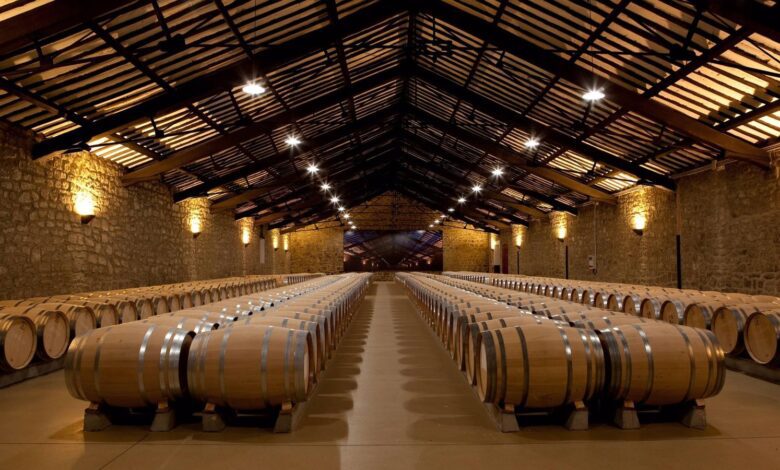
Built between 1890 and 1909, the pavilion was designed with a single purpose: to optimize operations at the winery. Gustave Eiffel introduced a groundbreaking design for that era. He eliminated all interior columns, opting for a system of metal trusses supported directly by the walls. This created a unified open space of 800 square meters—ideal for moving barrels and monitoring wine maturation. Remarkably, more than a century later, the room is still used for its original purpose: aging one of the company’s flagship wines—Imperial.
Eiffel’s Living Legacy
A recent restoration has returned the building to its original spaciousness, freeing it from the dense rows of barrels that once filled almost every inch. Now, visitors to the Aldea del Vino complex, where the pavilion is located, can fully appreciate the engineer’s vision. While most of Eiffel’s legacy is concentrated in France, his genius left its mark in other parts of Spain as well, such as the now-lost railway bridge over the Tagus River in Extremadura. However, few of his international projects have survived so well and continue to serve their original purpose.
Tradition and Modernity
The CVNE winery stands out not only for its architecture. Since 2005, its technical staff has consisted entirely of female oenologists—a rarity in an industry historically dominated by men. The employees emphasize that this was not the result of a policy, but a natural process based on professionalism. “We were hired not because we are women, but for our knowledge and skills,” says one of them. The Eiffel Pavilion has become a must-see on Rioja wine tours. Its unique architecture and rich history attract enthusiasts from around the world, putting it on par with highlights like the “bottle cemetery,” where vintages dating back to 1928 are stored.
Incidentally, Alexandre Gustave Eiffel was a renowned French engineer who specialized in designing metal structures. His name is forever etched in history thanks to the tower in Paris, built for the 1889 World’s Fair. However, his legacy is much broader. Eiffel also designed the internal framework for the Statue of Liberty in New York. In addition, his firm created hundreds of bridges, train stations, and other structures worldwide, from Portugal to Vietnam. His works became symbols of the Industrial Revolution and engineering progress.