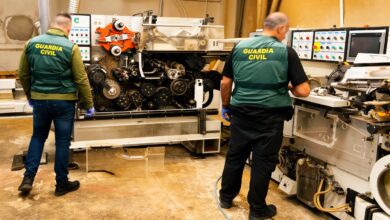
In recent days, Ceuta has once again found itself in the spotlight due to a major anti-drug trafficking operation. Spanish law enforcement officers are conducting thorough inspections of industrial facilities in the El Tarajal area, located just a few hundred meters from the Moroccan border. This area has repeatedly appeared in investigations related to illicit drug transportation and is now a renewed concern for local residents and authorities. According to El Pais, police actions are linked to the recent arrests of 16 individuals in Ceuta, as well as in Andalusia and Galicia, highlighting the interregional nature of the problem.
The situation is further complicated by the fact that El Tarajal is already known as a site where an underground passage used for large-scale hashish smuggling was previously discovered. This time, police attention has focused on warehouses where, according to operational intelligence, there may be another tunnel of this type. Not only police but also firefighters were involved in the inspections, helping to pump water out of basements. This allowed access to previously flooded areas, where new elements of smuggling infrastructure could have been concealed.
Underground routes
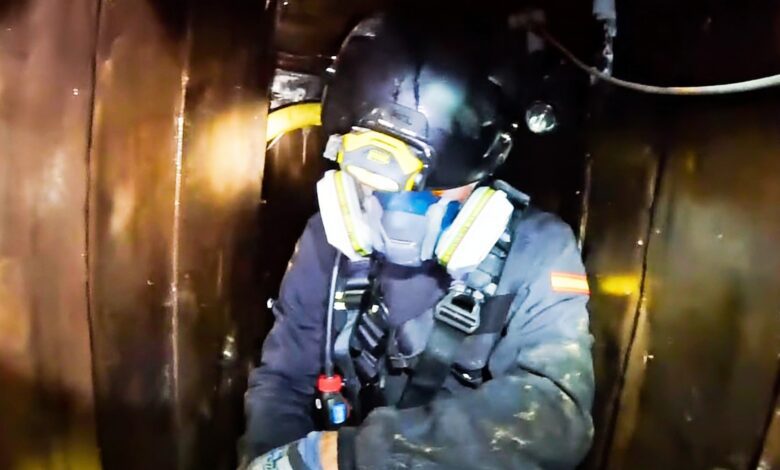
A year ago, the Guardia Civil discovered a carefully concealed tunnel in the same area leading toward Morocco. The investigation, named Operación Hades, became one of the most high-profile operations in the fight against drug trafficking on the Spanish-Moroccan border. The tunnel was hidden inside a former marble workshop, and the inspection took several days due to high water levels and concerns about crossing the national border underground. Only after pumping out the water were specialists able to traverse the entire underground corridor, which was equipped with lighting and pumps to remove water.
Inside the tunnel, investigators found wooden panels covering the walls, heavy hinges on the ceiling, and traces of silicone, indicating efforts to make the structure as inconspicuous as possible. According to El Pais, one inspection turned up empty bottles and even a suitcase, likely left behind in haste. Videos recorded during the inspection showed high humidity and flooded sections, making it difficult to move through the tunnel. All these details point to a professional approach by the organizers and their willingness to invest significant resources in building such facilities.
Investigation expands
The current police operation in Ceuta is a continuation of efforts launched last year. At that time, the Guardia Civil was waiting for a response from Moroccan authorities regarding possible tunnel exits on their territory. Now, according to russpain.com, attention has once again turned to El Tarajal, where investigators believe there may be another underground route used for drug trafficking. The involvement of underground infrastructure specialists and the use of modern technology offer hope for uncovering new evidence and preventing further smuggling attempts.
During recent arrests, police detained not only residents of Ceuta but also suspects from other regions of Spain. This confirms that the hashish transportation network spans several autonomous communities and operates with a high level of coordination. According to El Pais, the investigation is ongoing, and it is possible that new episodes and participants in the criminal scheme will be identified in the near future.
Context and consequences
Spain has been dealing with the issue of underground tunnels used for smuggling drugs across the border with Morocco for several years. Such incidents have been recorded not only in Ceuta but also in other border areas, including Melilla and the southern provinces of Andalusia. Each newly discovered tunnel prompts a review of security measures and tighter control at strategically important sites. In recent years, authorities have introduced new technologies to monitor industrial zones and border territories, yet those behind the tunnels continue to find ways to bypass the system. The surge in activity in Ceuta shows that the problem remains current and requires constant attention from law enforcement agencies.