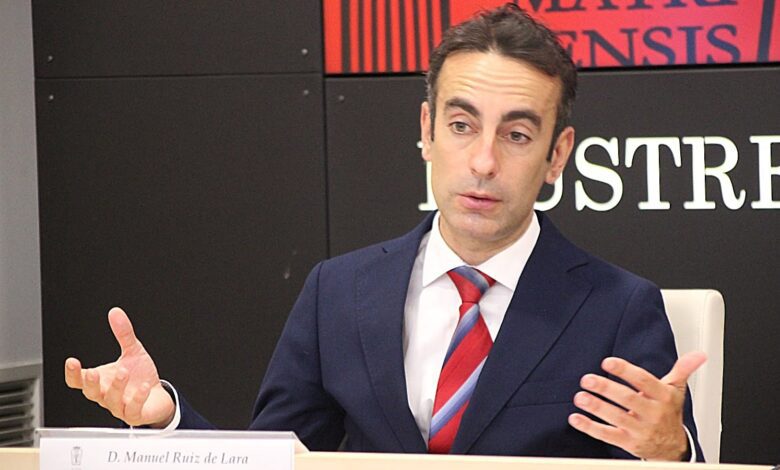
A high-profile decision by the Disciplinary Committee of the General Council of the Judiciary (CGPJ) has once again raised questions about the boundaries of acceptable conduct for judges in Spain. The spotlight was on a Madrid judge who publicly commented on the wife of the Prime Minister, sparking strong reactions both in legal circles and among the public. The commission’s final ruling not only surprised many but also prompted a broader discussion on ethical standards within the Spanish judicial system.
Debate over the boundaries
In February, the CGPJ Disciplinary Committee reviewed the case of judge Manuel Ruiz de Lara, who posted on social network X (formerly Twitter), using the term ‘Barbigoña’ in reference to Begoña Gómez, wife of Prime Minister Pedro Sánchez. According to El Pais, the commission confirmed that the judge was indeed the author of the post, despite his denials. However, the majority of committee members decided not to impose disciplinary measures, explaining that the publication was made not as a representative of the judiciary, but as a private individual.
The ruling emphasizes that judges can only be sanctioned for misconduct committed while performing official duties. In the majority’s view, if a judge does not indicate his position and does not act on behalf of the court, his private statements are not subject to disciplinary action. At the same time, it is noted that the publication may have been inappropriate or even ethically questionable, but it did not violate the formal code of conduct for judges.
Views within the commission
However, not all commission members agreed with this approach. Three progressive CGPJ members issued a dissenting opinion, insisting on a fine of 3,000 euros. They argue that a judge, even outside of work, must adhere to standards of respect and impartiality, especially when public activity relates to professional duties. In their view, the post on X, in which the judge’s account shared links to his expert appearances, blurs the line between private individual and professional.
The commission’s progressive members also pointed out the sexist nature of the expression “Barbigoña,” considering it incompatible with the principles of equality and respect that should underpin the judiciary. They emphasized that even limited dissemination of the message does not eliminate its potential impact on public trust in the judicial system, since the post quickly reached the media and sparked public reaction.
Arguments and consequences
Other perspectives were also discussed during the proceedings. The prosecution service viewed the post more as an ill-conceived joke than a violation, and the disciplinary prosecutor initially suggested closing the case. However, after further investigation, a sanction was nonetheless proposed, but the majority of the commission members maintained their position and sided with the prosecution.
As a result, the commission’s decision became final and can now only be appealed in court. This case once again raised the question of where the line lies between judges’ personal freedom and their duty to uphold the reputation of the judicial system. According to El Pais, such situations are becoming increasingly common amid the growing social media activity of public officials.
In recent years, Spain has frequently seen debates over public statements made by judges and other civil servants. For instance, in 2024, there was a case in which another judge faced disciplinary action for online comments, and in 2023, several officials received warnings for participating in political debates outside of work. These incidents highlight how acute the issue of balancing personal freedom and professional responsibility has become in the era of digital communication.