In 2026, Korrika, the largest event in support of the Basque language, began with an unexpected scandal that has already influenced the public mood in the Basque Country. The organizers’ decision to bar the CCOO trade union from participating, followed by the Socialists’ refusal to march, sparked a heated reaction among politicians and ordinary residents. For many Spaniards, this was a worrying sign: language initiatives meant to bring people together are now becoming grounds for new conflicts.
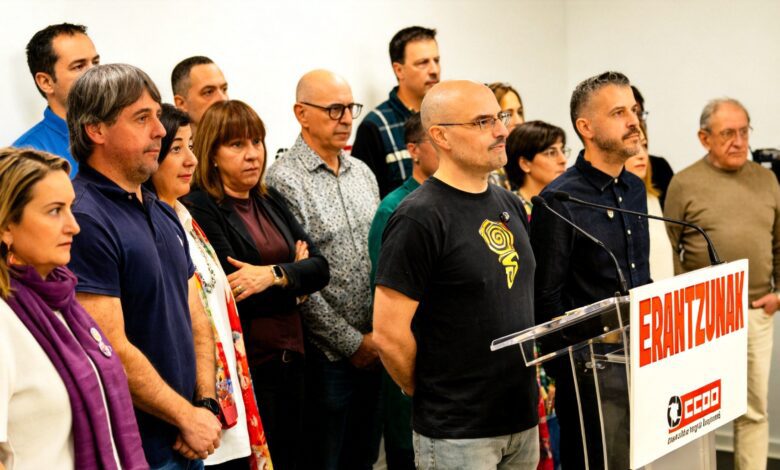
Organizers from AEK explained that CCOO’s participation contradicted the principles of the event due to the union challenging requirements for Basque language proficiency in public competitions. According to El Pais, CCOO offices have faced repeated attacks in recent months, and the organization itself has spoken of a ‘social apartheid.’ Even though courts have at times sided with the union, Korrika organizers found their presence at the language celebration unacceptable. AEK representatives claim there was no formal ban, only a statement of their position, but no compromise was reached.
Political response
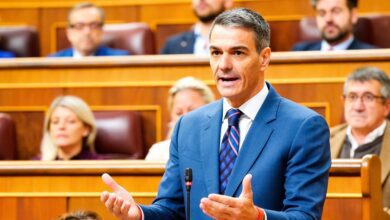
The Socialist Party (PSE-EE) publicly condemned the exclusion of CCOO, calling it an act of intolerance that harms the promotion of Euskera. The party leadership stressed that such decisions stray from the principles of openness and pluralism. Nevertheless, both the Socialists and CCOO urged their supporters to participate in Korrika individually, without officially representing their organizations. The Basque Government also stated that Korrika should remain an event that unites, not divides, society. Deputy Lehendakari Ibone Bengoetxea (PNV) emphasized that promoting Euskera requires dialogue and joint efforts, especially since the language has yet to become truly widespread in the region’s daily life.
Other political groups took a less clear-cut position. EH Bildu chose not to comment on the conflict, only calling for widespread participation in support of the language. Supporters of Sumar and Podemos, on the other hand, criticized AEK’s actions, while the ELA and LAB unions backed the organizers. According to El Pais, such polarization around language initiatives has become more evident in recent years and may affect the future of similar events.
Scale and traditions
Despite disagreements, Korrika will once again unite thousands of participants and hundreds of towns. This year, the route will stretch for 2,175 kilometers across the Basque Country, Navarra, and the French part of the region, with the relay baton changing hands more than 3,400 times. The event is funded by selling individual kilometers of the route. In the past, CCOO actively supported this movement by purchasing segments and partnering with AEK to promote Euskara among its members. However, the current conflict has cast doubt on the future of their cooperation.
The Korrika finish is scheduled for March 29 in Bilbao, where a major celebration is planned. Organizers hope that despite political differences, the event will attract a record number of participants. According to russpain.com, such large-scale initiatives in Spain often spark discussion not only of cultural but also social issues, as happened recently during debates over public festivities in Valencia, which were covered in the article on conflicts at the Fallas festival.
Context and consequences
The Korrika has a history spanning more than four decades and over this time, the event has become a symbol of support for the Basque language and the region’s cultural identity. The relay usually brings together people from across the ideological spectrum, but, in recent years, language issues have become increasingly politicized. Tensions have also flared up around language initiatives in other regions of Spain, where requirements for proficiency in local languages have become the subject of court cases and public debate. In 2024, for instance, similar disputes arose in Catalonia and Galicia, with access to public office and the role of language in education under discussion.
Overall, the situation surrounding Korrika in 2026 reflects a broader trend: language and cultural initiatives are increasingly becoming arenas for political disagreement. This affects not just the atmosphere of the events themselves, but also how language projects are perceived in society. Experts note that if such conflicts continue to develop, they could change both the format and the goals of mass movements supporting regional languages throughout Spain.
In recent years, Spain has seen a rise in public debates and political statements surrounding major cultural events. For instance, in Valencia, large gatherings during Fallas sparked discontent among some residents and businesses, leading to a review of the festival’s regulations. Similar trends have emerged in other regions, where traditional festivities now face new challenges amid shifting public attitudes and political dynamics.