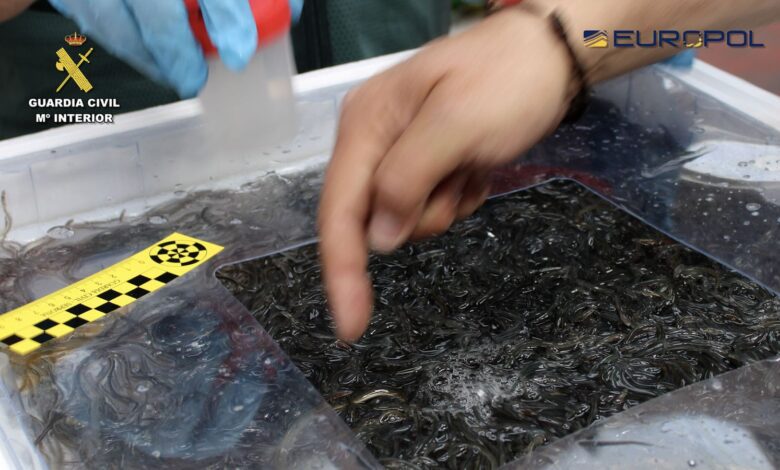
A major operation has unfolded in Gipuzkoa, potentially reshaping the rare fish market in Spain. With a total ban on eel fishing imposed by Basque Country authorities for the 2025-26 season, police launched a large-scale crackdown on the illegal trade in this species. The ban followed a sharp decline in eel populations below safe biological limits, raising concerns among experts and local fishers.
On Tuesday morning in the Aginaga area of Usurbil, Guardia Civil officers launched an operation targeting the illegal trade in juvenile eels. According to El Confidencial, the action responds to increased activity by criminal groups using sophisticated schemes to transport and market glass eels. The operation is ongoing and its full scope remains undisclosed, but it has already reached key locations previously linked to illicit fishing and sales.
Ban context
Strict limits on eel fishing were imposed after scientific reports revealed a dramatic decline in eel numbers in Euskadi’s waters. According to russpain.com, these measures could reshape the market and tighten oversight of biological resources. Fishers formerly specializing in eels are now seeking alternative livelihoods, and local businesses are experiencing supply disruptions.
The situation is complicated by high demand for elvers not only in Spain but also abroad. This creates conditions for the development of a shadow market, where elver prices can far exceed legal levels. Authorities note that combating illegal trade requires coordination between various agencies and international cooperation—especially with France, where cases of illegal exports are also recorded.
International cooperation
The operation in Gipuzkoa was not the first of its kind. In May 2023, the Guardia Civil, together with the Gendarmerie française, Europol, and OLAF, conducted a series of raids in several localities, including Oiartzun and Getaria. At that time, 1.5 tons of live elvers and several tons of frozen products without the required paperwork and sanitary certificates were seized. As a result, 27 people were detained in Spain and France, marking one of the biggest successes in the fight against the illegal trade of rare fish species.
As El Confidencial reports, such operations demonstrate that the issue is not only regional but also international. The involvement of European bodies makes it possible to track supply chains and identify organized groups operating across several countries. This is especially important given that profits from the illegal trade in elvers are comparable to revenues from other types of smuggling.
Impact on the region
For residents of Gipuzkoa and other coastal areas of the Basque Country, stricter controls mean not only reduced access to a traditional product, but also potential changes in the region’s economy. The fishing sector, which relies on the seasonal catch of baby eels, is now forced to adapt business models and look for new niches. At the same time, increased police measures may reduce illegal operations and gradually help restore the local eel population in the region’s rivers.
In recent years, Spain has become a frequent stage for large-scale operations targeting the illegal trade of marine resources. For example, in 2024, several groups involved in catching and exporting banned mollusk species were detained in Galicia. Similar actions took place in Andalusia, where authorities tightened controls over tuna fishing. These developments indicate that the fight against poaching and illegal trade remains a top priority for the country’s law enforcement agencies.