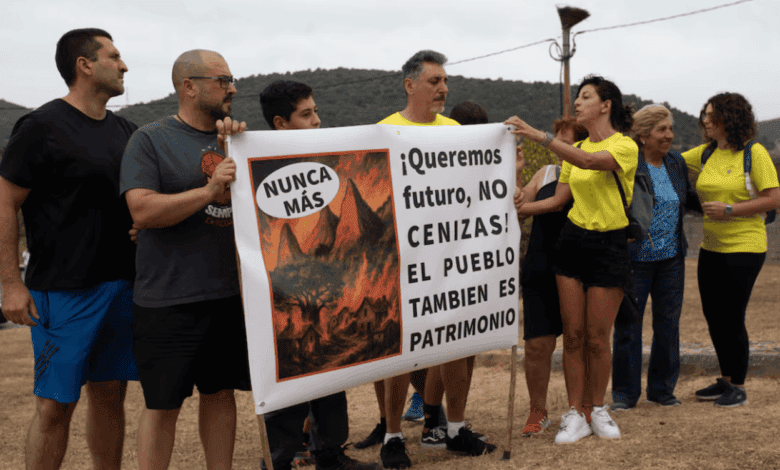
In the small village of Las Médulas (province of León), home to just 75 residents, a serious water supply problem has resurfaced. After recent forest fires and subsequent rains, locals discovered that their tap water had become unfit for consumption. Authorities warned the population about high manganese levels, making the water hazardous to health.
The fires that swept through the outskirts of Las Médulas this summer damaged not only the unique natural landscape but also the local infrastructure. When the rains came, ash and combustion residues seeped into the soil and then into the underground springs and wells that supply the village. As a result, the water turned cloudy and developed an unpleasant odor, while laboratory tests revealed levels of harmful substances exceeding permissible limits.
Residents were especially disappointed, as 400,000 euros had just been invested in the water supply system. This money was expected to ensure stable and safe access to water even during droughts or tourist influxes. However, despite the large-scale works, the problem not only persisted but actually worsened after the natural disasters.
People now have to buy bottled water and water in canisters for all their daily needs. The situation is especially hard for the elderly, who struggle to carry water home from stores on their own. Many point out that the authorities seem more focused on preserving the status of Las Médulas as a World Heritage site than on the real needs of local residents. Meanwhile, the influx of tourists in the summer only adds more pressure to the already outdated infrastructure.
Infrastructure challenges and hopes for change
Residents have repeatedly alerted officials about the vulnerability of the water supply system. After the wildfires, they warned that the first rains would inevitably wash contaminants into the sources. However, according to locals, these warnings were ignored. Now that their predictions have come true, people are demanding not only urgent measures to provide drinking water, but also long-term solutions to the problem.
The municipal authorities admit the situation is serious. In their view, contamination occurred because rainwater washed ash residue into the wells. Tests have shown that manganese levels in some samples significantly exceed the norm, while in others the data is lower. This suggests the problem may be localized, but it still requires a comprehensive approach.
Social tension and the future of Las Médulas
Local residents fear that if the situation doesn’t change, the village could lose not only its tourist appeal but also its permanent inhabitants. People are tired of constant water shortages, especially during the summer season when many visitors arrive. They believe that without reliable infrastructure, it is impossible to talk about the region’s development or the preservation of its unique heritage.
For now, the residents of Las Médulas continue to hope for a quick resolution and wait for the authorities to finally pay attention not only to the monuments and tourists, but also to those who live here year-round.