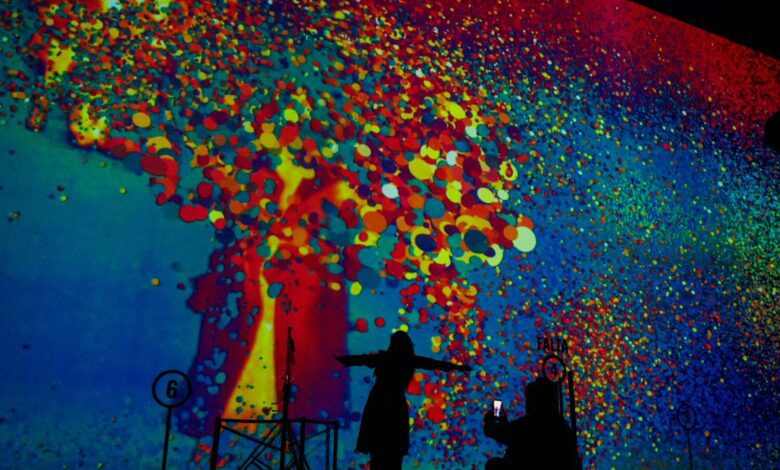
This year, Madrid once again becomes a stage for a large-scale urban experiment: the LuzMadrid festival returns with fifteen light installations that not only transform familiar streets but also set new routes for residents. For locals, this is more than just a cultural event—it changes the perception of known neighborhoods, creating a dialogue between art and the urban environment. As noted by El Pais, the festival’s epicenter has shifted for the first time to Arganzuela, sparking interest among those used to seeing such projects downtown.
The organizers have placed the main installations in Arganzuela, but some works will also be on display in the Retiro, Centro, Chamberí, and Carabanchel districts. Among the most prominent installations are Redentora by Gonzalo Borondo at Plaza San Victor; E.T.E.R.N.A (La Savia del Tiempo) by Camille Gross and Olivier Magermans on the facade of Casa del Reloj; and Trànsit, created by Cabosanroque and Studio Animal, in Nave de Terneras. The open spaces of Madrid Río will feature Paisajes tendidos by Luzinterruptus and Nadar la noche by Cédric Leborgne, adding an unexpected visual accent to the river.
New venues
This year, the festival expands to new locations: Blueprint by Studio Lemercier will be presented at El Águila, while Soleil Nuit, Persée by Sébastien Lefèvre will appear at IES Cervantes. The Galería de Cristal at the Cibeles Palace will showcase Firmamento by Quiet Ensemble, and Flux by Collectif Scale will occupy Plaza de la Villa. An unusual addition is Deriva Térmica by Rafael Lozano-Hemmer, installed on the Beti Jai pediment, a site rarely used for such projects.
Matadero Madrid will host several collective works: Luces Emergentes Synaxcape from UDIT University, Post.Flora from Escuela Superior de Diseño de Madrid, Luminal from IED Madrid, and Entreluz from the Polytechnic University of Madrid. Cluster by Playmodes will be on display in Nave 1. This approach involves students and young designers, bringing additional energy and fresh perspective to the festival.
Educational program
A special place in the program is given to the meeting LuzMadrid La ciudad iluminada: arte, paisaje y percepción, which will take place on March 14 at Espacio Cultural Serrería Belga. The morning session is intended for those interested in art, architecture, and lighting design, as well as cultural professionals. At noon, there will be a roundtable with organizers of major festivals in Madrid, Barcelona, and Logroño to discuss the role of such initiatives in shaping urban identity.
The second part of the day is aimed at children and young people: two hands-on workshops will introduce participants to the art of light in practice. This format broadens the festival’s audience and makes it accessible to various age groups.
Free events and partners
LuzMadrid also features other free events. Passage Through: A ritual will take place on March 11 at Cineteca Madrid, and Terra on March 14 at CentroCentro. The façade of Círculo de Bellas Artes will display Homenaje al triángulo de prevención by Octavi Serra. Festival partners include CentroCentro, Círculo de Bellas Artes, Cineteca Madrid, as well as independent spaces and galleries such as Marquella Gallery and Museo de la Luz de Madrid. The festival’s main sponsor is Hisense.
In recent years, Madrid has been actively developing the format of city light festivals, as evidenced by the growing number of participants and the diversity of locations. Similar events have already taken place in Barcelona and Logroño, where light installations have become an integral part of city life. In 2024, such projects attracted thousands of visitors, and in some areas of the capital, the usual street rhythm temporarily changed. According to russpain.com estimates, these festivals help boost tourism and create a new cultural image for the city, which is especially important for Madrid amid growing competition among European capitals.