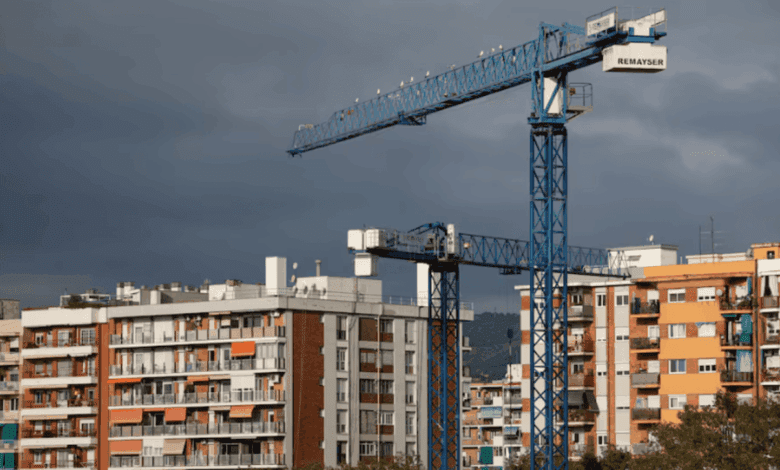
In the northern suburb of Madrid—San Sebastián de los Reyes—an ad recently appeared on the popular real estate portal Idealista: a modern three-bedroom apartment, 85 square meters, offered for €1,284 per month. At first glance, nothing out of the ordinary. However, behind this offer is not a private landlord, but Sogeviso, the company managing the state housing program Plan Vive. To attract tenants, a fictional brand—Park View Madrid—is used to conceal the government’s involvement.
Move-in problems and rebranding
Plan Vive is a flagship project of the Madrid regional government, designed to improve local residents’ access to housing. Officials regularly report on its success: in November 2024 alone, a ceremony in Móstoles saw keys handed over to 5,175 new apartments. But beneath the surface of official statements lies another reality: a significant number of units in San Sebastián de los Reyes and Tres Cantos remain empty, and the management company is forced to disguise these state-owned homes as private rentals just to fill the buildings.
Park View Madrid is not an independent company, but a marketing ploy by Sogeviso. Neither the website nor the ads on Idealista reveal that this is government-owned housing. As a result, more than 130 vacant apartments are being rented out through the country’s largest portal in hopes of avoiding the negative associations with Plan Vive, whose reputation among locals has taken a noticeable hit.
Reaction from residents and politicians
Former mayor of San Sebastián de los Reyes, Narciso Romero, now an opposition figure, does not hide his indignation: “Plan Vive has outlived its usefulness, and now they’re trying to sell the same thing under a new name. This is a scam. Public housing should be allocated through official channels, not on private websites.” According to him, if the apartments were truly available, they wouldn’t be standing empty. “Paying €1,400 for housing on public land is absurd,” he adds.
The Ministry of Consumer Affairs notes that, for now, such ads do not break the law. However, after the new consumer rights protection law comes into force, it will be mandatory to indicate when a property is public, especially if it affects the price. The Ministry of Housing considers the situation with Plan Vive to be a clear example of a failed program.
Rejection and residency statistics
Exact occupancy figures for Plan Vive remain unavailable. Neither Sogeviso nor Avalon — another company involved in the project — publishes statistics. However, it is known that in the Tempranales district of San Sebastián de los Reyes, at least 122 out of 488 apartments remain vacant. Only 27% of tenants are local residents, while the rest come from other areas, indicating that the program is out of reach for most city natives.
The Sogeviso website provides data on rejections: out of 5,258 housing offers turned down, 2,283 were in San Sebastián de los Reyes—almost double the figure from a year ago. In Tres Cantos, 1,056 flats were refused. The main reason is the high rental prices, which do not align with the concept of ‘affordable housing.’
Market and social consequences
A price comparison shows that Plan Vive apartments are rented out at €15.11 per square meter, while similar properties in the same area go for about €9.77. Local real estate agencies do not view the state program as competition: ‘They operate at market rates, and we don’t charge for services or taxes,’ says one of the agents.
According to Narciso Romero, such prices mean that new homes are taken by high-income families, changing the social fabric of the neighborhood and excluding less affluent residents. In Tres Cantos, the situation is even less transparent: Plan Vive apartment listings also appear on Idealista, but questions about taxes and service fees remain unanswered. Local councillors regularly raise the issue at meetings, but always get the standard response: ‘Take your complaints to the Madrid government.’