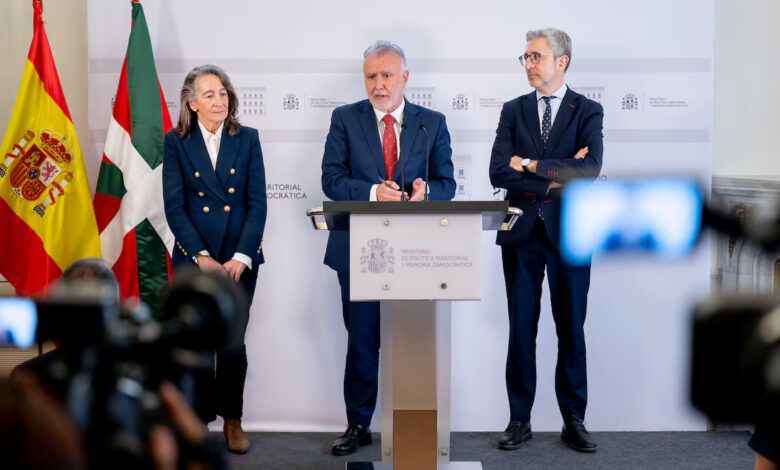
Talks in Madrid have concluded and are already being called some of the toughest in recent years. Spain’s central government and the Basque Country administration have agreed to transfer five key areas of governance. These include oversight of unemployment benefits, non-contributory social assistance, maritime rescue, school insurance, and technical equipment inspections in Barakaldo. The autonomous authorities will receive these powers in stages: some as early as this year, and the rest from January 2027.
Both sides admit that negotiations were tough, but the result is significant for both parties. For the Basque Country, this is not just an expansion of powers, but a step toward strengthening self-government. For Madrid, it is a chance to maintain political stability and support the coalition with nationalists.
Key changes
The most notable innovation will be the shift to regional control over unemployment payments. Now, Basque authorities will be responsible for distributing subsidies, which amount to an estimated 822 million euros annually. The region will also take over 30 employment service offices and more than 500 staff members. However, despite the transfer of functions, the state will retain the right to set general rules and standards.
The authorities of the Basque Country emphasize that the new system will simplify citizens’ lives. There will be no need to visit multiple agencies anymore — all employment-related matters can be resolved in one place. According to regional officials, this will improve the efficiency and quality of services.
Social support
The second key area will be the management of non-insurance social benefits and school insurance. These support measures are especially relevant for low-income families and students. Granting these powers will allow the region to set its own priorities and respond more quickly to residents’ needs.
Maritime rescue is another area that will now fall under the autonomy’s supervision. Starting in October, Basque services will independently coordinate water rescue operations. This decision is explained by the need to take regional specifics into account and respond swiftly to emergencies.
Technical details
The transfer of the Technical Verification Center in Barakaldo may seem less noticeable, but it is highly significant for the region’s industrial sector. Now, control over equipment safety will be handled by local specialists, which should speed up processes and enhance oversight.
The regional authorities emphasize that all these measures do not undermine the unity of the country’s social security system. This is about reallocating functions, not creating parallel structures. According to Basque officials, this approach will allow for more efficient use of budget resources and improve the quality of life in the region.
Political context
The agreement was reached after extensive consultations among representatives of various ministries. The process involved not only politicians but also experts, lawyers, and economists. The main goal was to maintain a balance between the interests of the region and the requirements of the Constitution.
Ángel Víctor Torres, the Minister for Territorial Policy, specifically noted that the transfer of powers does not violate the principles of solidarity or the unity of the country. At the same time, Basque Country representatives call this decision historic, stressing that it opens up new opportunities for the region’s development.
Looking ahead
Despite the progress made, both parties acknowledge that much work still lies ahead. The authorities of the Basque Country are determined to secure the transfer of the remaining items stipulated in the Estatuto de Gernika. Meanwhile, Madrid hopes this new phase of cooperation will help ease tensions between the central government and the region.
The agreement has already sparked lively debate in political circles. Some see it as a step toward greater autonomy and improved well-being for residents. Others worry that such concessions could weaken central authority. Nevertheless, change is underway, and its impact will become apparent in the coming years.