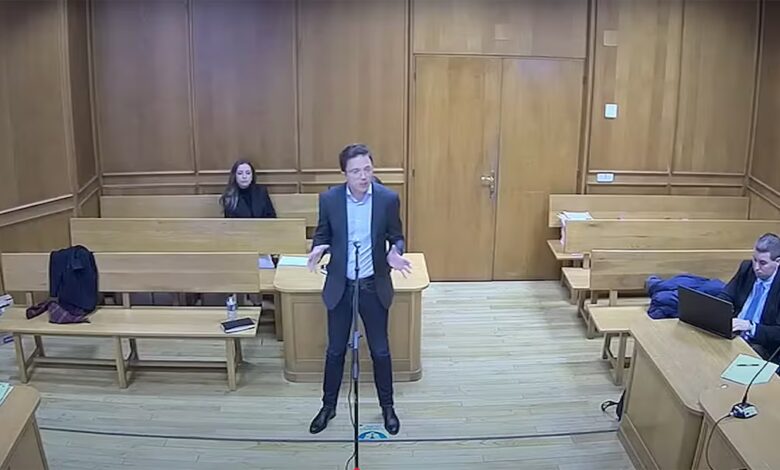
A high-profile court battle is unfolding in Madrid between former lawmaker and ex-Sumar spokesperson Íñigo Errejón and actress Elisa Mouliáa. The judge of the ninth investigative court in the Spanish capital has officially accepted Errejón’s lawsuit, in which he accuses Mouliáa of defamation. The case stems from her public complaint alleging that he committed sexual assault in late 2024.
The court hearing is scheduled for February 17, 2025. Both parties are expected to present their versions of events in person. The judge plans to hear arguments from each side to determine whether there are grounds for further investigation into the defamation case.
Íñigo Errejón, a former Sumar representative in Congress, maintains that the accusations against him are entirely unsubstantiated and have damaged his reputation. In response to the actress’s allegations, he filed a countersuit, claiming to be the victim of false statements.
Elisa Mouliáa, known for her roles in Spanish TV series, had previously gone to law enforcement with a sexual assault claim. Her report sparked wide public debate and became a topic of discussion in Spanish media and on social networks.
The legal proceedings promise to be complex, given both parties’ public profiles and the heightened attention to sexual crimes in Spain. In the coming weeks, the court is expected to hear not only from the main parties but also possible witnesses, as well as examine all submitted evidence.
The court’s decision could affect not only the fate of both parties but also public perception of similar cases in Spain. If either party is found guilty, both criminal and civil consequences are possible.
If you didn’t know, Iñigo Errejón is one of Spain’s most prominent politicians in recent years, founder and former leader of Más País, and one of the initiators of the Sumar movement. Elisa Mouliaá is a well-known Spanish actress who has starred in several popular TV series and films. Their conflict has drawn attention not only because of their high profiles, but also due to the importance of the topic—allegations of sexual offenses and accountability for public statements.