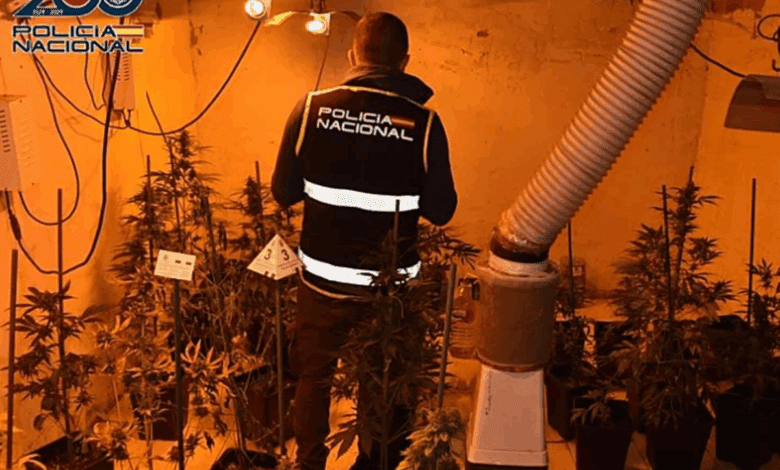
In Madrid, the discovery of a large-scale drug plantation network inside a residential building in Villaverde has become a cause for concern among the capital’s residents. A police operation revealed how criminal groups use ordinary apartments to cultivate marijuana, threatening the safety of neighbors and disrupting the peace of entire neighborhoods. This incident highlights the vulnerability of urban communities in the face of organized crime and underscores the importance of timely responses to such threats.
Operation in Villaverde
In the San Cristóbal district, officers of the National Police carried out a major operation to dismantle 13 clandestine marijuana plantations. All of them were located within a single residential block on Beniferri street, in buildings numbered 28, 30, and 32. According to El Pais, a criminal group made up of members of the same family had turned these apartments into a real center for the cultivation and processing of drugs. Each location was equipped with state-of-the-art technology, and among network members these premises became known as “The Office.”
Police noted that the criminals did not confine their activities to a single apartment—they spread production across several units to ensure a constant supply. Some apartments were inhabited by ordinary people who were forced to live with threats and fear due to their proximity to the drug traffickers. During the operation, officers conducted 16 searches, seizing 4,300 marijuana plants, 30 kilograms of consumable buds, as well as firearms, ammunition, knives, €5,000 in cash, and equipment for plant cultivation.
Structure and scale
The investigation began back in November 2024, when police discovered signs of a family clan specializing in the production and distribution of marijuana. Group members clearly divided responsibilities among themselves, using apartments in three neighboring buildings. These homes also housed people not involved in criminal activities, who were under constant pressure and threats.
To ensure year-round production, the criminals divided the plantations into several zones, some of which were equipped as real bunkers with enhanced security. Investments in equipment and infrastructure reached €300,000, allowing them to maintain a high level of production and product quality. According to police estimates, if all the marijuana were sold at retail, the criminal group’s income could exceed one million euros a year.
Arrest details
As a result of the operation, five people were detained—three women and two men. They have been charged with drug trafficking, illegal possession of weapons, involvement in a criminal group, and electricity theft. All detainees were taken into custody. In addition to seizing drugs and weapons, police arrested bank accounts, vehicles, and eight properties linked to illegal activities.
According to El Pais, the criminal network used advanced technology to increase production efficiency. Apartments were equipped with climate control systems, lighting, and automatic irrigation, allowing optimal conditions for plant growth. The operation concluded on February 4, when police simultaneously searched all involved apartments and seized all materials found.
Context and similar cases
In recent years, there has been an increase in the use of residential properties in Spain for underground drug plantations. In 2025, police in Valencia also uncovered a network of apartments converted for marijuana cultivation, resulting in the arrest of several dozen people. In Barcelona in 2024, a similar operation led to the seizure of more than 5,000 plants and the arrest of the organizers. Such incidents highlight the ongoing need for monitoring residential spaces and strengthening measures against illegal drug trafficking. According to RUSSPAIN.com, authorities are considering harsher penalties for these crimes and expanding cooperation between police and city residents.