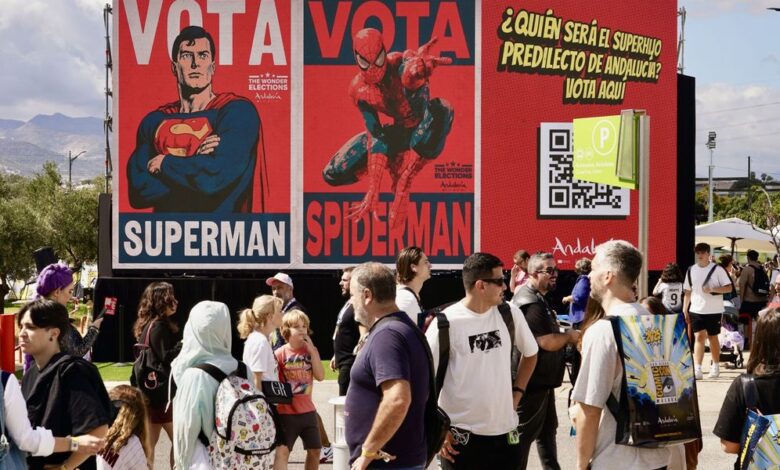
The large-scale Comic-Con festival has just concluded in Málaga, drawing a record 125,000 attendees and generating a substantial economic impact for the city—around 50 million euros. However, this success also revealed serious challenges: entry lines stretched for hours, and the exhibition center proved too small for such a crowd. The mayor has already acknowledged that without urgent expansion of the congress hall, Málaga risks missing out on new opportunities.
In recent years, Málaga has firmly established itself among the leading Spanish cities for tourism. In 2024, hotel occupancy averaged 83%, significantly above the national level. Last year, the city welcomed 1.5 million visitors, most of whom were foreigners. Since 2010, tourist numbers have nearly doubled, and this trend continues unabated.
Today, Málaga ranks seventh among Spanish cities in terms of tourist numbers, and fourth in short-term rentals. By these measures, it has even surpassed larger cities such as Valencia and Sevilla. The city offers more than 140 hotels and nearly 7,500 short-term rental properties, providing over 45,000 overnight accommodations. Yet even this was not enough for major events: during Comic-Con, hotels were nearly at capacity, and some guests had to be accommodated in neighboring towns.
Experts note that Málaga has yet to develop its own tourism strategy and often copies successful models from other cities. The city council is focusing on attracting ‘quality’ tourists—not necessarily the wealthiest, but those who are loyal and culturally engaged. However, many believe that Málaga needs to set its priorities and stop trying to pursue everything at once.
The impact of tourism on residents’ lives has also raised concerns. The rise in short-term rentals and hotel business has driven up housing prices, and locals increasingly complain about being pushed out of the city center. Rental market representatives argue that the tourism boom has helped restore abandoned buildings and brought people back to the city, but admit that infrastructure is struggling to keep up with demand, and bureaucracy is hampering the development of the housing market.
As a result, Málaga finds itself at a crossroads. On one hand, tourism success brings money and jobs to the city. On the other, there is growing discontent over overcrowding, insufficient hotels, and social imbalances. Experts are calling on authorities for structural reforms and to find a balance between the interests of business, residents, and visitors. The city is only beginning to consider what it wants to become in the future—and whether it can sustain its success without losing its identity.