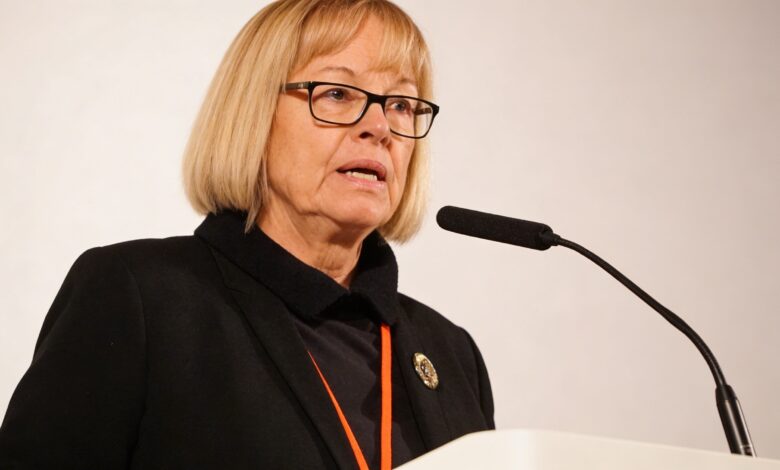
The death of Maria Badia became a significant event in the political life of Catalonia and all of Spain. Her passing sparked a wave of discussion among officials and the public, as Badia was associated with major changes in the relationship between Catalonia and European institutions. According to El Pais, it was largely thanks to her work that many issues of the region’s foreign policy gained new prominence on the international stage.
Maria Badia was born in Sant Quirze del Vallès (Barcelona) and was closely connected with the PSC for many years, where she represented the party’s Catalanist wing. Until 2015, she actively participated in the Socialists’ activities, then made the decision to leave the PSC. This move came as a surprise to many colleagues, as Badia was considered one of the most consistent advocates for dialogue between Catalonia and Madrid.
Transition to the Catalan government
After leaving the PSC, Maria Badia took up the post of Secretary for Foreign Affairs in the government of Carles Puigdemont. Her appointment coincided with a period when Catalonia was actively seeking new ways to strengthen its position in Europe. At that time, Badia became a key figure in promoting the region’s interests internationally, drawing on her experience in the European Parliament.
From 2004 to 2014, Maria Badia represented the PSC in the European Parliament. During this period, she earned a reputation as a politician capable of finding compromises and building bridges between various political forces. Her work was recognized by colleagues within the party as well as by representatives of other European bodies.
Reaction from politicians and the public
The news of Maria Badia’s death quickly spread throughout political circles. Miquel Iceta, former First Secretary of the PSC and current Ambassador of Spain to UNESCO, was one of the first to announce the tragedy. He emphasized that Badia’s contribution to shaping Catalonia’s European policy is hard to overestimate. Jaume Duch, the Catalan government’s advisor on EU affairs and foreign policy, also highlighted the significance of her work for the region.
Javi López, Vice-President of the European Parliament and PSC deputy, called Maria Badia a role model for many young politicians. He noted that thanks to people like Badia, issues of language, culture, and Catalonia’s European integration received greater international attention.
Importance for Catalonia and Europe
Maria Badia became a symbol of change for many Catalans. Her work in the European Parliament and in the Puigdemont government helped put the region on the European political map. According to El Pais, it was through her efforts that Catalonia managed to establish dialogue with several European institutions, which proved especially important during periods of political crisis.
Maria Badia’s death prompted a renewed reflection on the role of women in Spanish and European politics. Her career demonstrates that persistence and professionalism can deliver meaningful change even in the most difficult circumstances. Many experts believe her example will continue to inspire new politicians for a long time.
Recent context
In recent years, Spain has repeatedly faced the loss of prominent politicians whose work has influenced both domestic and foreign policy. For example, in 2024, a former foreign minister passed away, which also generated significant public response. In Catalonia, the departure of several key figures connected to the independence movement and European integration was widely discussed. These events highlight the importance of continuity and preserving experience in the political sphere. Each such case sparks debate about the future of the region and its place in Europe.