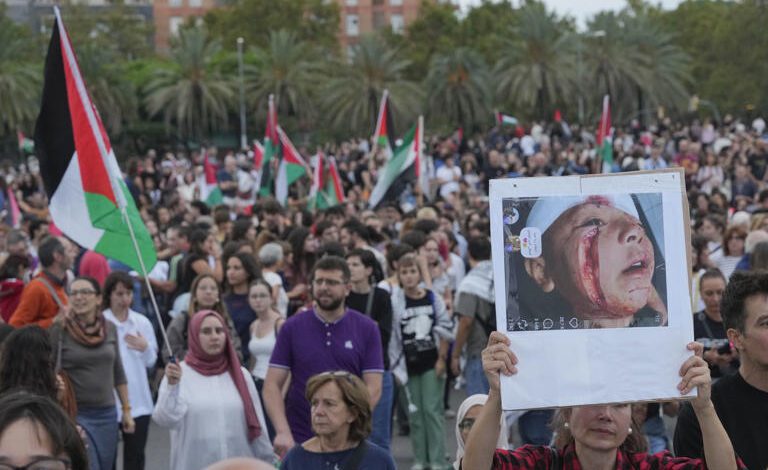
On Thursday, a wave of protests swept across Spain, triggered by the interception of ships bound for the shores of Gaza. On board were 65 Spanish citizens, among them former Barcelona mayor Ada Colau. The Israeli military operation sparked mass demonstrations, bringing together people of different ages and backgrounds.
In Madrid, central squares and adjacent streets were filled with thousands of protesters. According to authorities, around 10,000 people gathered in the capital alone. Young people, members of political movements, and concerned citizens carried Palestinian flags, left-wing party symbols, and chanted slogans against Israel’s actions. The crowd included well-known politicians, as well as pensioners and students. The atmosphere was tense yet energetic, with calls for sanctions, accusations against the Israeli government, and demands to end the violence.
The march began at the Ministry of Foreign Affairs, went through the city center, and ended at the Congress of Deputies. There, participants read a statement condemning the interception of the ships and demanding compliance with the arms embargo. At the rally’s conclusion, the crowd chanted slogans against local politicians accused of supporting Israel and performed a traditional Arabic chant. Later, police dispersed those gathered at Plaza de Neptuno, detaining one man for disorderly conduct and resisting arrest.
Other cities across the country, including Barcelona, Bilbao, Valencia, and Pamplona, also saw mass demonstrations. In Barcelona, where the flotilla set off, around 15,000 people took to the streets, blocking one of the main thoroughfares. In the Basque Country, slogans were chanted in Basque, while in Pamplona and Santander, protesters blocked roads to express discontent over the detention of activists. In some instances, police detained participants for disorderly conduct and assaulting law enforcement officers.
The day concluded with widespread discussions on social media and calls for further action. Spanish society once again demonstrated its active stance on international issues and its willingness to take to the streets in solidarity with those affected by conflict.