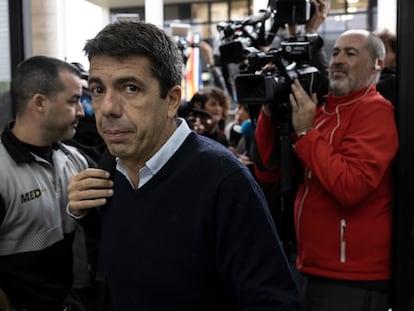
In Valencia, political tension has once again come to the forefront after the unexpected return of former head of government Carlos Mazón to the Les Corts chamber. His appearance at five o’clock in the evening sparked a heated reaction among opposition deputies, who saw it as a sign of disrespect towards parliament’s work and disregard for pressing social issues. For local residents, this development could signal protracted debates over government transparency and the accountability of elected officials.
Criticism and accusations
Mazón, taking a seat in the back row of the Partido Popular faction, immediately attracted attention. His absence from the morning session, where new president Juanfran Pérez Llorca was presenting his first report to deputies, did not go unnoticed. Members of the opposition, particularly from PSPV and Compromís, accused the former president of showing up only for the evening meeting and ignoring the debate on changes to the social support system—Renta Valenciana de Inclusión.
Compromís deputy Francesc Roig stated that parliament had effectively been paralyzed for four months to safeguard Mazón’s interests. His colleague, María José Calabuig, recalled the housing allocation scandal in Alicante, where she claimed Mazón’s name is among the key figures. She also pointed out that the ex-president left the chamber just a few minutes after the discussion began.
Questions of status and privilege
The situation is complicated by the fact that after stepping down as head of the government, Mazón kept his parliamentary seat, which grants him legal protection during the investigation into the aftermath of the flooding (dana). According to ElPais, this status allows him to avoid direct confrontation with Judge Nuria Ruiz Tobarra, who is leading the investigation. Victims’ associations and opposition parties are demanding that Mazón resign not only from his leadership role but also from his parliamentary seat.
On Thursday, Les Corts plans to review a Compromís initiative calling for his resignation. However, the proposal to reform the status of former presidents—which would strip them of lifetime privileges and seats on the Legal Advisory Council—was not included on the agenda. Under current law, Mazón is entitled to the services of two advisors, a driver, security, and a dedicated office already opened in Alicante. His former chief of staff, José Manuel Cuenca, has been appointed as an advisor.
Details of parliamentary activity
After his resignation, Mazón became the Partido Popular representative on the Les Corts regulations committee, a role that earns him an additional monthly payment. However, this committee meets extremely rarely and does not engage in lawmaking—the last session was back in 2020. This situation raises questions from the opposition about the justification for such appointments and the allocation of budget funds.
Recalling other high-profile cases involving the actions of former leaders during crises, it’s worth noting that earlier, public attention was drawn to Mazón’s decision to forgo security on the day of the tragic flood in Valencia. Details of this episode and its impact on regional politics were discussed in the article about the reasons behind Mazón’s refusal of security during the disaster.
Context and consequences
In recent years, questions of accountability for former officials and transparency in their activities after leaving office have been discussed more frequently in Spain. Scandals involving the use of official privileges have become a catalyst for public debate and calls to review legislation. In regions where political rivalry is especially fierce, such situations often lead to prolonged conflicts between parties and growing mistrust in government institutions.
Other autonomous communities have also seen disputes over the status of former leaders and their participation in advisory bodies. These debates are often accompanied by demands to restrict former high-ranking officials’ access to state resources. As a result, every new high-profile comeback or scandal involving privileges becomes a trigger for fresh initiatives and changes to regional laws.