A significant shift is beginning in Spain’s retail sector: Mercadona is introducing a new store model that could change the daily habits of millions of residents. The company is focusing on ready-made meals and quick food solutions, reflecting the rising demand for such products and the decreasing time people are willing to spend cooking at home. This strategy is already impacting store layouts and product ranges, and in the long term, it could even lead to the disappearance of kitchens in homes.
According to RUSSPAIN.COM, Mercadona has been actively developing its ‘Listo para Comer’ line for several years, making it one of the main drivers of growth. The company leads in this segment, offering a wide range of dishes that customers can take away or eat on the spot. This approach meets the needs of shoppers who value speed and convenience and prefer not to spend time cooking at home.
New store format
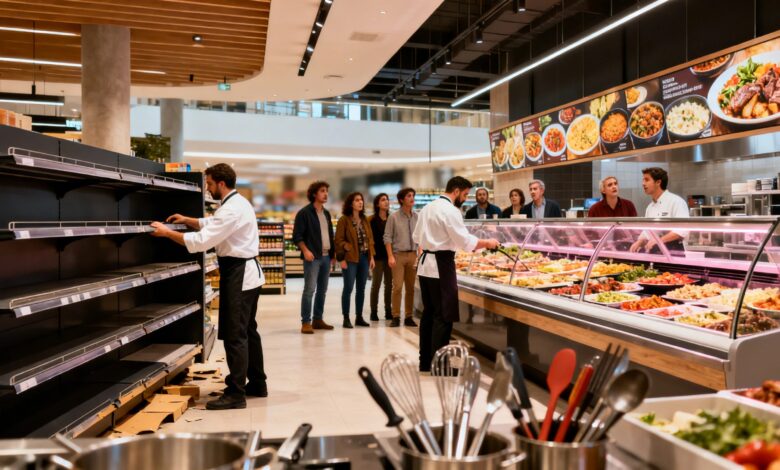
As part of this transformation, Mercadona is testing its ‘Tienda 9’ concept, which completely changes how the supermarket operates. At the center of the store is now a dedicated space where products are sliced, packaged, and prepared. This setup speeds up service and improves staff efficiency. The area devoted to ready-made food is expanding, while traditional counters are gradually being replaced by shelves with dishes ready to take without waiting.
The changes affect not only the internal organization but also the appearance of the stores. New ready-meal zones are designed so that customers can quickly select what they need and leave without lingering at the checkout. In some stores, the usual sections for cooking from scratch are already being reduced, highlighting a shift in consumer priorities.
A shift toward ready-made solutions
Mercadona is gradually rolling out the new format in various regions, starting with pilot locations. The company plans to expand this approach, aiming for most of its stores to operate under the revamped model by the middle of the decade. This reflects a global trend: more and more people prefer to buy ready-made food instead of spending time cooking at home.
As a result, Mercadona stores are beginning to resemble modern gastronomic spaces, with a focus on quick service and a variety of ready meals. This may ultimately lead to traditional home kitchens becoming rare, and the habit of cooking taking a back seat.
Impact on the market and consumers
The move to a new format could transform not only store layouts but also consumer behavior. Demand for semi-prepared and ready meals continues to rise, and Mercadona’s competitors are already adopting similar strategies. For many families, this offers a way to save time and effort, but it also raises questions about the quality and variety of their diet.
According to RUSSPAIN, similar changes have already taken place in other European countries, where major chains also focused on ready-made food and reduced traditional departments. In Spain, this process is just gaining momentum, with Mercadona emerging as one of the main drivers of change.
In recent years, the Spanish retail market has seen a wave of innovation: cashier-less stores are appearing, delivery services are expanding, and the range of ready meals is growing broader. In 2025, several large chains have already launched pilot stores with minimal staff and maximum automation. These trends show that the traditional supermarket format is changing rapidly, and new solutions are becoming the industry standard.