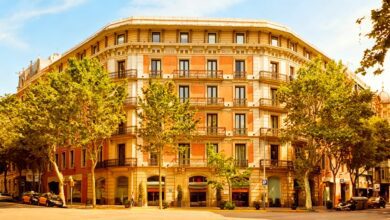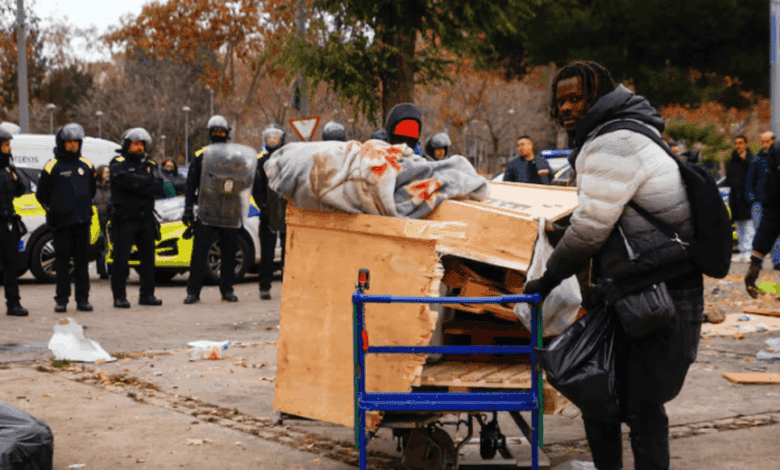
In Badalona, the eviction from the former B9 institute building—where for two years hundreds of migrants, mostly from sub-Saharan Africa, had lived—has been completed. The building now stands empty, fenced off, and is being prepared for the construction of a police station. But those expelled from B9 haven’t left the city. They have settled just a few dozen meters from their old shelter—now their new home is out in the open, on a small square between apartment buildings.
In the evening, more than a hundred people gather here. They shelter in tents; some try to warm themselves by a fire, while others return with bags of scrap metal—collecting it is the main source of income for many. Most lack documents, which means they cannot expect to find legal work or receive help from the state.
Tent city
When night falls, the square turns into an improvised camp. People share their meager supplies, discuss the latest news, and wait to see what will happen next. Among them is Younouss, an electrician from Senegal who used to be one of the informal leaders at B9. He says the eviction hasn’t solved the problem—it’s only made things worse: now people are left without even basic living conditions, and no one is offering them a solution.
Local authorities have reported the successful eviction of the building and promised not to allow any new informal settlements. Mayor Xavier Garcia Albiol stated he would not let migrants occupy other buildings or streets. However, in reality, a new camp already exists, and no one is rushing to take control of it. Estimates indicate that about forty people remain in the square, while the rest have dispersed to neighboring towns or found temporary shelter elsewhere.
Residents’ reaction
Residents of the Sant Roc neighborhood watch the situation with concern and sympathy. Some recall that at least in the institute building, the migrants had a roof over their heads, even if conditions were harsh. Now, they’re forced to sleep outside, without protection from the cold and rain. One local family says the situation has only gotten worse: “It was bad in the institute, but it’s even worse here.”
Idriss, a 42-year-old native of Guinea, says that before, in B9, they had some stability: electricity, water, a place to cook and interact. Now all that is in the past. People have to survive on the street, not knowing what awaits them tomorrow. The authorities have offered them neither housing nor any long-term solutions, and only 17 people from the former B9 residents received temporary assistance.
Without support
The city administration does not plan to invest in housing for migrants. Those who left B9 before the eviction are trying to find shelter in other cities or searching for new abandoned buildings to live in. Those remaining in the square hope the situation will change, but admit it cannot go on like this for long. The tent camp won’t withstand winter, rain, or the authorities’ indifference.
Idris says they are not going to disappear: “We can’t just vanish. Many are looking for other places in Badalona, but so far haven’t found anything.” Among the migrants, there is a sense of utter neglect and indifference from officials. They don’t believe anyone cares about their fate, and continue living in the square, uncertain what tomorrow will bring.