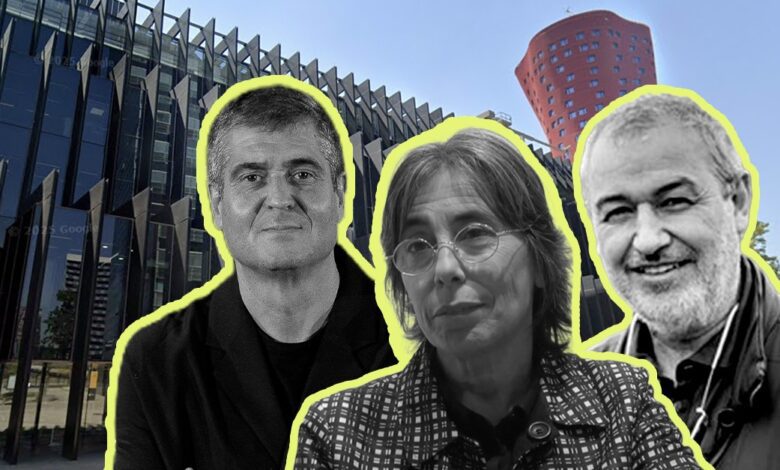
In the world of architecture, few teams have a style and atmosphere as instantly recognizable as RCR Arquitectes of Spain. Founded in 1987 in Olot (Olot, Gerona), the studio has long since transcended regional acclaim. The trio—Rafael Aranda, Carme Pigem, and Ramon Vilalta—do more than design buildings; they create entire worlds where space, light, and nature engage in dialogue. Their approach is not just about aesthetics but also about a deep respect for context, history, and human perception.
In Spain, their works have become markers of time and place. From small kindergartens to large-scale public spaces, every RCR Arquitectes building seems to invite viewers to pause and reflect. It is hardly surprising that the team was awarded the prestigious Pritzker Architecture Prize in 2017, and their projects frequently make the shortlists of European competitions.
The Catalan legacy
Most of the studio’s landmark projects are located in Catalonia, where the architects feel most at home. In the small town of Riudaura (Riudaura, Gerona), they created ‘Espais per l’Oci i la Cultura’—a space for leisure and culture that is not just integrated into the landscape, but seemingly dissolves within it. Recognized by the Mies van der Rohe Award jury, the building has become a magnet for local residents, uniting the church, the square, and the municipality into a single whole.
In Manlleu (Barcelona), RCR Arquitectes have completed two projects: the Els Colors kindergarten and a covered swimming pool. In the kindergarten, the architects focused on how children perceive their environment. Low windows, vibrant colors, and intuitive navigation all foster a sense of safety and independence for young kids. The swimming pool stands out for its unique atmosphere—water reflections, soft lighting, and tranquility turn it into a space for meditation and relaxation, not just sports.
Harmony with Nature
In the Vall de Vianya valley (Gerona), the architects undertook the renovation of the historic La Vila de Trincheria estate. Among barns, a river, and a mill, they created a modern leisure space without disturbing the site’s historical fabric. The project received two FAD awards—a natural outcome, as the blend of traditional materials and innovative solutions has become the bureau’s hallmark.
The Les Cols restaurant in Olot stands out in particular. It’s not just a place for culinary experimentation, but a true architectural performance. Inside, you’ll find three halls, spacious verandas, and pavilions for relaxation. The air is filled with the scent of fruit trees, while massive stone walls evoke a sense of seclusion. Les Cols is a prime example of how architecture can amplify the emotions and experiences of a space.
Urban Experiments
RCR Arquitectes are not afraid to tackle dense urban environments. In Ripoll (Gerona), on the site of the demolished La Lira theater, they created a multifunctional public space that has become a new hub for locals. Here, there are no usual boundaries between the street and the building—everything flows seamlessly into one another, inviting social interaction and shared activities.
In Barcelona, the architects completed the Sant Antoni-Joan Oliver library project. The building was not only a finalist for the Mies van der Rohe Award but also transformed the entire neighborhood. The library serves several purposes: it’s a reading room, a meeting place, and even a club for seniors. An inner courtyard with a playground makes the space a true oasis amid the city bustle.
Color and Light
Another kindergarten—El Petit Compte in Besalú (Gerona)—fascinates with its play of color and light. The yellow, red, blue, and green structures are not just visually pleasing, but also create a unique atmosphere for children. The architects designed an inner courtyard for play and a separate light well that unites all the rooms into a single whole.
In Hospitalet de Llobregat (Barcelona), RCR Arquitectes built the Plaça Europa 31 office building. Its stepped form and curved façade highlight the energy of the modern urban landscape. The project was originally intended as the headquarters for a large company, but was later reimagined as a multifunctional office center. This building illustrates how architecture can be adaptable and respond to the demands of the times.
Impact and Recognition
The work of RCR Arquitectes has frequently sparked discussion within the professional community. Their approach to design always seeks a balance between innovation and respect for tradition. These architects are unafraid to experiment with materials, forms, and spaces, yet they never lose sight of the individual or their needs.
In Spain, their projects have become a symbol of a new perspective on architecture. They don’t just construct buildings—they create environments where people want to live, work, and unwind. Perhaps this is what truly sets RCR Arquitectes apart from many other firms: their work leaves no one indifferent, whether professionals or ordinary city residents.
RUSSPAIN reminds readers that RCR Arquitectes is a Spanish architectural firm founded in 1987 in Olot (Catalonia) by three architects: Rafael Aranda, Carme Pigem, and Ramon Vilalta. The team has achieved global recognition, including the Pritzker Prize in 2017, and is renowned for projects that blend innovation, contextual sensitivity, and a unique spatial approach. Their work has received numerous awards and has been realized not only in Spain but also internationally.