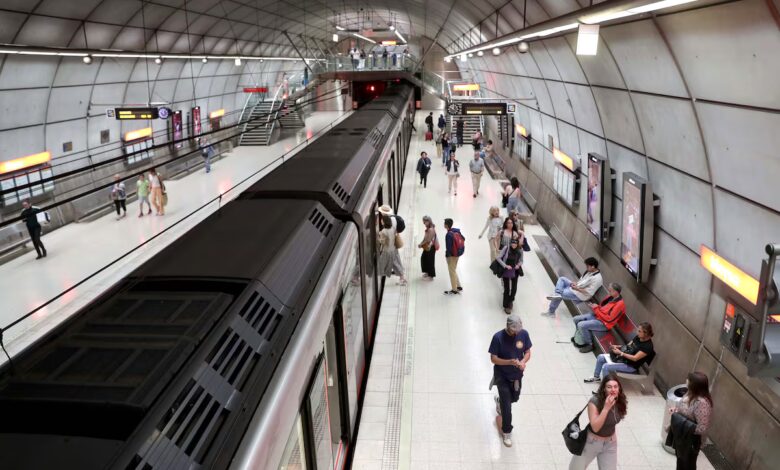
The authorities of the Basque Country and the province of Bizkaia have officially announced the launch of a major infrastructure project set to transform the daily routes of thousands of Bilbao residents. In the coming years, the city will see the addition of a new metro line, connecting the city center to the southern districts, home to a significant portion of the population, including many immigrants. Until now, these neighborhoods were only linked to the center by buses, commuter trains, cars, and bicycles. Now, residents will have an alternative — a modern, fast mode of transportation right at their doorstep.
The new branch will serve as an extension of the existing third line, but will be assigned its own number and status as the fourth metro line in Bilbao. According to plans, the route will run through the Rekalde and Irala neighborhoods, which are home to around 50,000 people. The stations will also serve residents of other districts that have so far been cut off from metro access. Among them are students at the Universidad de Deusto campus, who currently have to walk nearly 20 minutes to the nearest station. Access to the Museum of Fine Arts and Parque de Doña Casilda, considered the city’s main green oasis, will also become much more convenient.
Layout and timeline
The project documentation and technical studies are already being updated to speed up the start of construction. The new line will stretch for 6.7 kilometers, following an S-shaped underground route from north to south. Investment in the project is estimated at 412 million euros. Tunnel boring machines are scheduled to start operating at the end of 2027—just in time for the next regional elections.
Particular attention is being paid to ensuring that the new line not only serves densely populated areas, but is also prepared for future expansion. Specifically, plans include the possibility of connecting to the Enkarterri region, the largest but least populated part of the province. However, this stage will be implemented later, once an agreement is reached to transfer suburban rail management powers between the regional and central governments.
Challenges and negotiations
Despite the ceremonial atmosphere of the presentation, reaching an agreement was not easy. In recent weeks, there have been serious disagreements between the leadership of Bizkaia and the Basque Country over technical and financial issues. Provincial representatives publicly emphasized that they were not prepared to fund the project unless it provided a link to Enkarterri. Ultimately, a compromise was reached, and infrastructure for future expansion will be laid from the very first stage.
The active involvement of local residents also played a significant role. For ten years, an initiative group advocating for the construction of the fourth line regularly held rallies and pickets outside the provincial administration building. Thanks to their persistence, the issue of the new metro line gained the attention of the authorities and was added to the agenda.
Social significance
Regional leaders emphasize that the development of rail connections is not just about convenience, but also an important step towards social and territorial cohesion. According to them, modern and accessible transportation should become the foundation for the city’s future, enabling every resident to reach their destination quickly and comfortably. Authorities are confident that the new metro line will help address longstanding mobility issues and serve as a catalyst for the development of Bilbao’s southern districts.
At the same time, the timeline for the second phase of the project remains uncertain. Delegating authority to manage suburban trains will require the approval of the central government, and negotiations on this matter may drag on. Nevertheless, it is already clear that the first phase of construction will mark the beginning of major changes to the city’s transport system.
If you weren’t aware, Eusko Trenbide Sarea is a state-owned company responsible for developing and operating the railway infrastructure in the Basque Country. The organization is involved not only in constructing new metro lines, but also in upgrading existing routes and coordinating operations with other regional transport providers. Thanks to its efforts, Bilbao and other cities in the region benefit from modern and convenient solutions for daily travel.