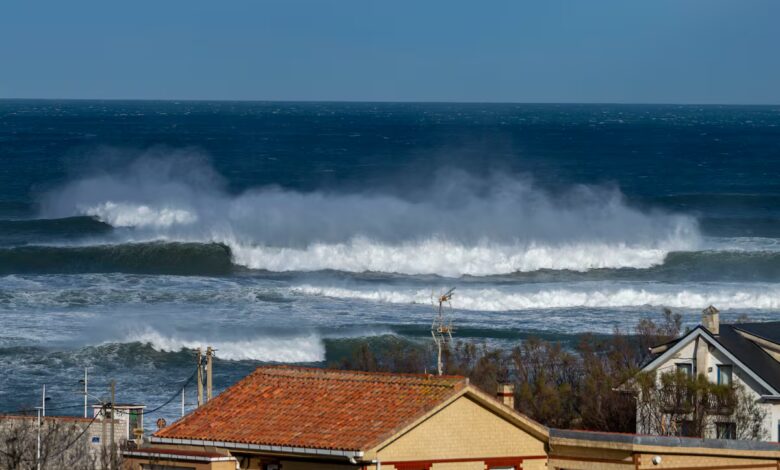
In the coming days, Spain’s northern coast will be in the spotlight as storm Goretti approaches. By Friday, meteorologists are forecasting a sharp deterioration in weather conditions: gale-force winds, heavy rains, and turbulent seas. Residents of coastal areas and fishermen are anxiously following the forecasts, as such phenomena rarely pass without leaving a trace.
Meteorologists note that Goretti is not just another storm, but a so-called ‘explosive cyclogenesis.’ This means that the atmospheric pressure at the center of the cyclone drops with exceptional speed, and the weather changes before your eyes. Despite its alarming name, nothing literally explodes — the term refers to the rapid formation of a powerful cyclone, capable of turning a calm sea into a raging storm within hours.
However, there is no need to panic. Experts emphasize that ‘cyclogenesis’ is purely a technical term used to describe processes when a cyclone rapidly intensifies. This time, the brunt of the severe weather will hit the northern regions of Spain, where preparations are already underway for possible disruptions to ports and transportation routes.
Name and meaning
Interestingly, the storm was named Goretti — the seventh name assigned so far in the 2025/2026 season. Previously, Spaniards and their neighbors faced Francis and Emilia, and now it is Goretti’s turn. Assigning names to such events is not just a formality. It is part of the pan-European Storm Naming program, which unites meteorological agencies from Spain, France, Belgium, Portugal, Luxembourg, and Andorra.
The idea behind this initiative is to make information about weather risks more accessible and easier for everyone to understand. After all, when a storm is given a name, it’s easier to remember, which means people can better prepare for potential consequences. At the same time, not every named weather event necessarily leads to disaster. Sometimes the storm passes by, leaving behind nothing more than wet streets and a sigh of relief.
Cyclone in detail
So what happens inside a storm like this? At the center of a cyclone, the pressure drops and winds begin to spiral counterclockwise. The faster the pressure falls, the stronger the wind becomes and the higher the waves rise. In Goretti’s case, meteorologists expect the strengthening process to be particularly rapid—this is why they call it ‘explosive.’
However, such phenomena are not uncommon for Spain. The country’s northern coast regularly faces powerful storms, especially during the winter months. Still, every new cyclone is a test for infrastructure, transport, and of course, for local residents. This time, particular attention is being paid to maritime safety: fishermen and owners of small boats have already been advised to stay out of open water for the next few days.
Response and preparedness
Authorities in northern regions of Spain have already begun taking precautionary measures. Some ports have imposed restrictions on vessel movement, and rescue services are on high alert. Residents of coastal towns are advised to monitor weather updates and, if possible, avoid walking along the shoreline during the storm.
There are particular concerns about possible disruptions to transport and power supplies. Similar storms in the past have caused power outages and traffic problems. Currently, utility services are working to prepare in advance for potential consequences to minimize damage.
European experience
It is worth noting that the practice of naming storms was introduced in Spain relatively recently, but has already proven effective. This approach makes people respond more quickly to warnings, and information about weather risks becomes clearer. This season, the list of names was agreed upon by the countries participating in the program, alternating male and female names.
However, not everyone shares the enthusiasm for these new terms and names. Some feel such measures simply fuel unnecessary anxiety. But experience shows it’s better to be warned than caught off guard—especially when faced with a force of nature capable of disrupting the daily routine of an entire region within hours.