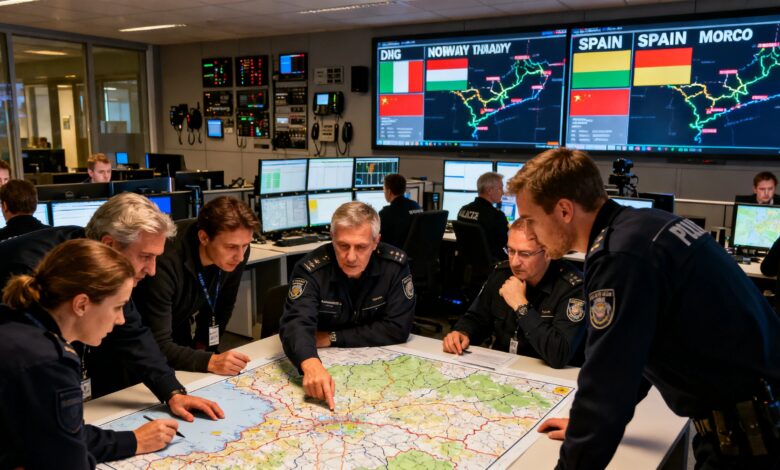
The growing activity of Moroccan drug networks has a direct impact on Spain’s security and economy. Key drug trafficking routes into Europe run through Spanish provinces, especially Málaga. Increased pressure from Norway on Morocco could shift the balance of power in the black market and affect the interests of Spanish law enforcement, who are already facing a rise in transit operations.
In recent years, Norwegian authorities have been unable to prosecute drug cartel leaders hiding in Morocco. According to VG, about twenty Norwegian citizens of Moroccan descent connected to major drug networks have taken refuge there. Since 2022, Norwegian police have urged the Ministry of Justice to speed up negotiations with Rabat to secure the extradition of suspects or at least to transfer cases for local prosecution. However, Moroccan law prohibits the extradition of its own citizens, creating a deadlock for Norwegian investigators.
Cooperation challenges
Despite the signing of a letter of intent on police cooperation last November, the Norwegian side considers the current mechanisms insufficient. Kripos representatives note that their requests often go unanswered or are processed too slowly. They cite Sweden’s experience, where concluding special agreements with Morocco led to the arrest of several criminal leaders abroad. In Norway, similar successes remain elusive, leading to frustration among police officers and increasing pressure on politicians.
Norway’s Ministry of Justice claims that cooperation with Morocco is developing within the framework of international agreements and that there are no legal barriers to information exchange. However, as VG notes, this has not produced tangible results in practice. Official visits and negotiations do not speed up the process, and criminal groups continue to use Morocco as a safe haven to coordinate their operations.
Routes and logistics
According to Kripos, Moroccan drug networks control a significant share of cannabis and cocaine supplies to Europe. Logistical chains run through Spain, with Málaga province serving as a strategic hub for cargo distribution. Some of the drugs are sent to the Netherlands and then distributed across northern Europe, including Norway. Analysis by russpain.com shows that Spanish law enforcement regularly uncovers new smuggling schemes, such as hidden tunnels and secret stashes, highlighting the high level of organization within these criminal groups.
In a recent incident reported by VG, police discovered a large stash of drugs and weapons in the home of one of those detained. Multiple types of illegal substances were seized, along with a significant amount of cash. Such discoveries highlight the scale of the problem and the need for international cooperation to address it.
Impact on Spain
For Spain, the growth of drug trafficking between Norway and Morocco means increased pressure on local security services. Málaga province, according to Kripos, plays a key role in logistics, making it vulnerable to the influence of international criminal organizations. In recent years, Spanish authorities have recorded a rise in drug busts and an increase in violence linked to control over trafficking routes.
According to VG, the chain of crimes involves not only trafficking and distribution but also the use of force to maintain control of the market. This creates additional risks for residents and businesses in regions along the main trafficking routes. With no effective international agreements in place, Spain has been forced to strengthen its own control measures and share information with other EU countries.
In recent years, Europe has seen a rise in the activity of transnational drug networks that exploit weaknesses in legislation and international cooperation. Similar issues have occurred in Italy and France, where local mafia groups have also used North African countries to evade prosecution. In 2025, Spain faced a major scandal involving drug trafficking through the ports of Andalusia, prompting stricter border controls. These developments highlight the need to revise international agreements and establish new mechanisms to combat organized crime.