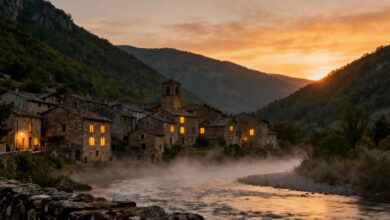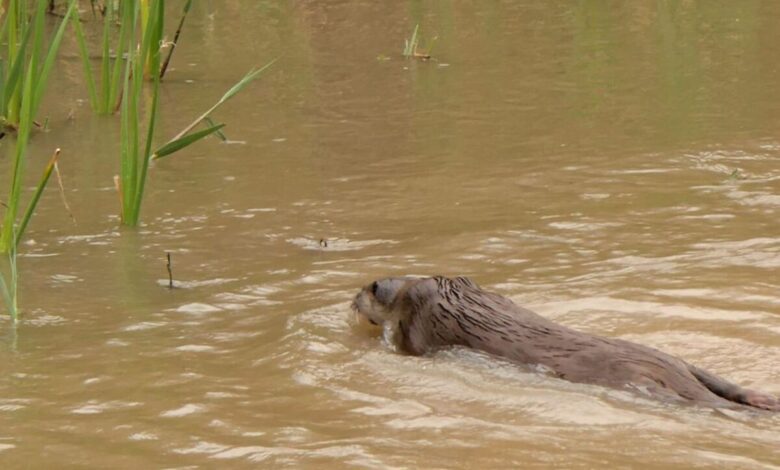
In the Montsant River valley, deep in the province of Tarragona, cameras recently captured something that not long ago seemed impossible: an otter gliding through the water once again. This event has become a sensation among local ecologists and residents. By the end of the last century, otters had completely disappeared from these parts, succumbing to pollution, drought, and human interference.
Now, nearly forty years later, their return is seen as a sign—perhaps not all is lost for Catalonia’s natural world. Yet this optimism is shadowed by many questions and concerns. Why did the otters leave? What has changed in Montsant? And most importantly—will they be able to stay for good?
Disappearance and return
In the 1980s, the European otter (Lutra lutra) was a common inhabitant of Catalonia’s rivers. But by the end of the decade, everything had changed dramatically. The waters in Montsant grew cloudy, the banks emptied, and the river was increasingly fragmented by dams and reservoirs. Otters, a symbol of clean and balanced ecosystems, vanished almost without notice. Their absence was an alarming signal: the river was ailing.
The first timid signs of their return appeared only in the 2010s. Ecologists spotted tracks and droppings at the time, but couldn’t confirm the animals were living there permanently. It was only this year that cameras recorded an otter confidently making itself at home. This is no passing guest, but apparently a new resident.
An ecological barometer
The otter is more than just a charming animal. Its presence says a lot: the water has become cleaner, fish and crustaceans have returned, and the riverbanks are once again covered with vegetation. For experts, it’s like litmus paper: if the otter is here, the ecosystem is recovering.
But it’s too soon to celebrate. The Montsant is a typical Mediterranean river: in summer it shrinks, and in dry years it can dry up completely. Such conditions are a real challenge for the otter. It depends on a steady flow of water and shelter, which are still in short supply.
Observation and hope
The otter’s life is now being monitored with special attention. Environmentalists install camera traps, study tracks, and analyze behavior. Every new image is like a small victory. In recent months, seven different otter sightings have already been recorded in various parts of the river, mainly below the Margalef dam, but there are signs upstream as well.
However, experts are not rushing to make bold statements. It’s still too early to talk about a stable population. It may be just a few individuals beginning to explore the area. Or it could be a temporary phenomenon due to favorable weather conditions.
Challenges ahead
The main threat to the otter is the unstable water regime. Droughts, which in recent years have become the norm in Catalonia, could drive the animals away again. In addition, human activity—construction, water extraction for agriculture, pollution—still poses a danger.
The management of the Montesano Natural Park admits: in the past, issues of water balance and river conservation were not a priority. Now the situation is changing. The return of the otter has prompted a rethink in approach. Plans include comprehensive river monitoring, the introduction of new management methods, and the restoration of natural riverbanks.
A new strategy
In the near future, the park administration and environmentalists will launch a large-scale project to study and protect Montesano’s aquatic ecosystems. Modern methods will be used: mapping, regular surveys, and analyzing data from camera traps. The goal is to understand what the otter needs to thrive—and create those conditions.
At the same time, specific measures are under discussion: limiting water extraction, restoring vegetation, and creating shelters for wildlife. All these steps should benefit not only the otter, but also other rare species that may follow its return.
A symbol of change
The appearance of the otter in Montesano is more than a biological event. It is a symbol that even the most damaged ecosystems can recover, if given a chance. But that chance is fragile. Any misstep, another drought, or an uptick in human activity could erase the progress of recent years.
Today, the otter is the main topic in local news and conversations. Its fate concerns not just scientists but ordinary residents, too. After all, if the otter stays, it means the river has truly come back to life. But if it leaves again, that will be a worrying signal for all of Catalonia.