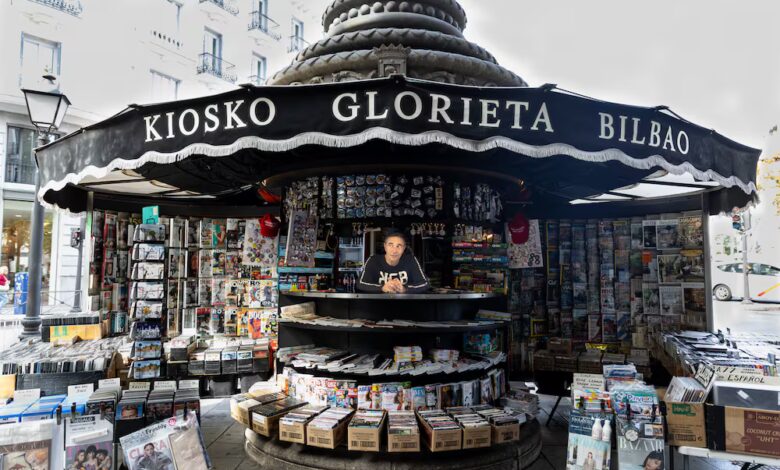
In the heart of Madrid, on Glorieta de Bilbao, stands a round newspaper kiosk recognized for years by all the locals. Its owner, representing the third generation of his family, has devoted almost his entire life to this business. But now, like hundreds of other kiosk owners, he’s not sure he’ll be able to continue after 2029. That’s when the municipal licenses for more than two hundred kiosks in the capital are set to expire.
In recent years, kiosk owners have faced a sharp decline in demand for print publications. There are several reasons: the rise of the internet, the 2008 economic crisis, and the effects of the pandemic. Newspaper and magazine sales have dropped nearly tenfold compared to previous decades. Young people are in no hurry to take over the family business, and those nearing retirement can’t find anyone willing to buy it—since in a few years the business itself might simply disappear.
Kiosks search for new ways to survive
To stay open, many kiosks have expanded their product range. Now, you can find not only newspapers and magazines here, but also DVDs, vinyl records, collectible toys, and even accessories. Some owners note that selling movies has become their main source of income, especially since video stores and large chains have almost disappeared. Kiosks are turning into informal community hubs: people come for advice, to exchange money, or just to chat. For many locals, they’re a part of daily life.
However, not everyone is ready to change their usual way of doing things. Some still rely solely on newspapers and magazines, believing that print media is the backbone of their business. Even they admit, though, that things have not returned to normal after the pandemic. People go out less, many work remotely, and customer traffic has dropped noticeably.
The future of kiosks is uncertain
There are hardly any young entrepreneurs left in this sector. Those who have decided to continue the family business try to introduce new services—such as pick-up and return points for parcels. But the income from these services is minimal, while the workload increases. Still, for some owners, it’s important not just to make a profit but to uphold a sense of comfort and community in the neighborhood. Kiosks remain a place where elderly people can have heartfelt conversations and children can buy collectible toys.
Kiosk owners face years of uncertainty ahead. No one knows if city authorities will renew licenses or under what terms. Many fear that after 2029, the familiar press stands will disappear from Madrid’s streets. For the city, this could mean not only the loss of small businesses but also an important part of urban life.