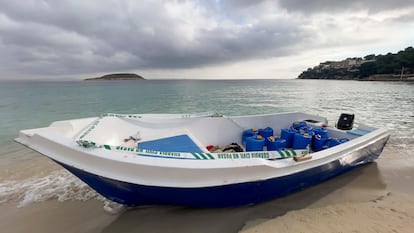
In the past two days, the Balearic Islands have seen a sharp increase in the number of migrants arriving in small boats. From Monday to Tuesday, 284 people were rescued on the shores of the archipelago. In total, around fifteen boats were detected in this period off the coasts of Mallorca, Ibiza, and Formentera.
According to local authorities, approximately 3,500 migrants have arrived in the Balearic Islands from January to July this year, an increase of 124% compared to the same period last year. The main reason cited for the rise in arrivals is favorable weather conditions, which make crossing the sea easier.
On Monday morning, rescue services found the first group of nine people southwest of Ibiza. Almost simultaneously, another four migrants were detained at the port of Colonia de Sant Jordi in Mallorca. Later, closer to ten in the morning, 33 people were rescued near Cabrera Island. That evening, several more groups of migrants were discovered on the coasts of Mallorca and Formentera, including near the Sés Salines and Sa Mola lighthouses, as well as south of Cabrera. In total, 97 people arrived on the islands on Monday.
On Tuesday, the flow of migrants continued. By four in the morning, 31 people had been detained in Colònia de Sant Jordi on Mallorca, and another 27 on Migjorn Beach in Formentera. During the night and early morning, rescue operations took place off the coast of Cabrera, where groups of 23, 24, 22, and 15 people were found. Later, in the area of Torrent de S’Alga in Formentera, another 27 migrants were detained on land. On Tuesday morning, six people were found in the port of Cabrera, and another 12 on the EI800 highway in Ibiza. By the end of the day, the total number of arrivals reached 187.
According to official statistics, last year 5,882 migrants arrived illegally in the Balearic Islands. Regional authorities have expressed concern over the situation. At a recent meeting between the head of the Balearic government, Marga Prohens, and Spain’s Prime Minister, Pedro Sánchez, in Palma, discussions focused on strengthening migration control measures and the need for additional resources for the region.
Regional authorities fear that if current trends continue, the Balearic Islands may face challenges similar to those seen in the Canary Islands. Most boats, according to officials, depart from Algerian ports, making it more difficult to control migration flows.
Migration remains one of the key issues for the Balearic Islands, and local authorities continue to emphasize the need for additional measures and resources to effectively respond to the situation.