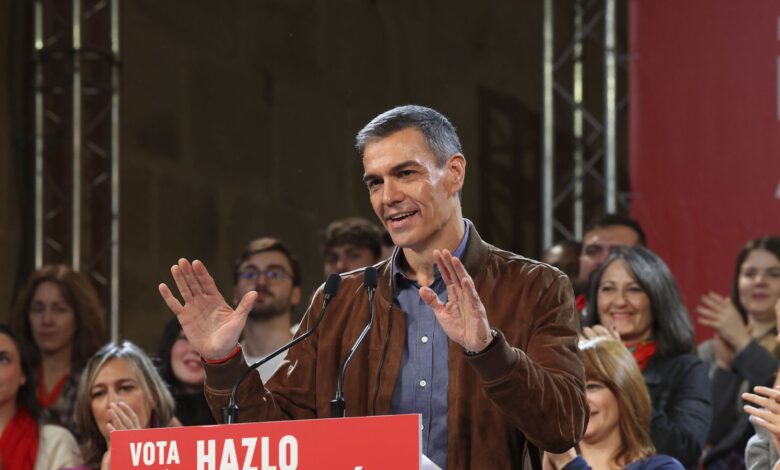
Spanish Prime Minister Pedro Sánchez spoke at a rally in Cáceres, expressing support for the Socialist candidate for the presidency of the Junta de Extremadura, Miguel Ángel Gallardo, who is at the center of a high-profile investigation. Sánchez emphasized that, despite the challenging political climate, his party has no intention of calling early elections. He noted that the government continues to function, despite searches, arrests, and accusations against individual party members.
Sánchez openly stated that he considers running the country an honorable task, even amid pressure and scandals. According to him, the main responsibility of those in power is to solve citizens’ problems and find ways out of difficult situations. He stressed that the Socialists are not afraid of challenges and are ready to be accountable for their actions.
Corruption and the Response
The head of government did not shy away from the issue of corruption, which has once again become the focus of attention. Sánchez called such instances a betrayal of the party’s principles and assured that PSOE always acts decisively when confronted with these situations. He drew a parallel with the opposition, accusing the right of turning a blind eye to and refusing to fight corruption within their own ranks.
Sánchez recalled that the Socialists do not sweep problems under the rug but address them at their root. He also referenced past scandals in the Partido Popular, stressing that the opposition cannot teach the Socialists how to fight corruption. In his view, the difference between the parties is clear: PSOE takes action while the right looks the other way.
Opposition Pressure
The Prime Minister sharply criticized the opposition’s persistent demands for early elections. He expressed puzzlement at the insistence of Alberto Núñez Feijóo, who, according to Sánchez, declined the opportunity to lead the government when he had the chance. Sánchez pointed out that elections are held every four years, and there is no reason to change that schedule due to the political maneuvering of opponents.
He also emphasized that he sees no sense in the constant calls for a change of power, especially when the results of the previous elections have been recognized by all parties. In Sánchez’s view, stability is more important than the political ambitions of individual leaders.
Criticism of the Church
In his speech, Sánchez did not ignore representatives of the Church. He responded to statements from the head of the Spanish Episcopal Conference, Luis Argüello, who had suggested considering options such as a vote of no confidence, a confidence vote, or early elections. Sánchez noted that such proposals only emerge when the Socialists are in power, and called on the Church to respect the results of democratic elections.
The Prime Minister recalled that the days when the Church directly influenced politics are long gone. He suggested that if Argüello wants to take part in political life, he should do so within existing parties or organizations—not from the church pulpit.
Scandals and Gender Policy
Sánchez also addressed the allegations of sexual harassment made against some members of the PSOE. He acknowledged that mistakes had been made, but emphasized that the party was the first to implement protocols to combat such cases and is prepared to enforce them in practice. According to him, the Socialists have always stood up for women’s rights and supported their initiatives.
The Prime Minister noted that all significant changes in the country have taken place with the active participation of women and with the support of PSOE. He promised that the party would continue to act decisively in such situations and would not allow such incidents to happen again.