Ahead of the elections in Aragon, politicians are focusing on the older generation. Pensioners have the power to shift the balance when traditional parties lose ground and new contenders ramp up the pressure. For many locals, pensions are not just an economic issue but also a political marker that shapes the region’s future.
Recent polls point to a worrying trend for the Socialists: their support among young and middle-aged voters is falling, while Vox is quickly closing the gap. In this situation, PSOE is compelled to rely on voters over 65, who make up a significant share of the electorate. Their votes could be decisive for retaining second place, as the margin with opposition parties is razor-thin.
The Pensioners’ Bet
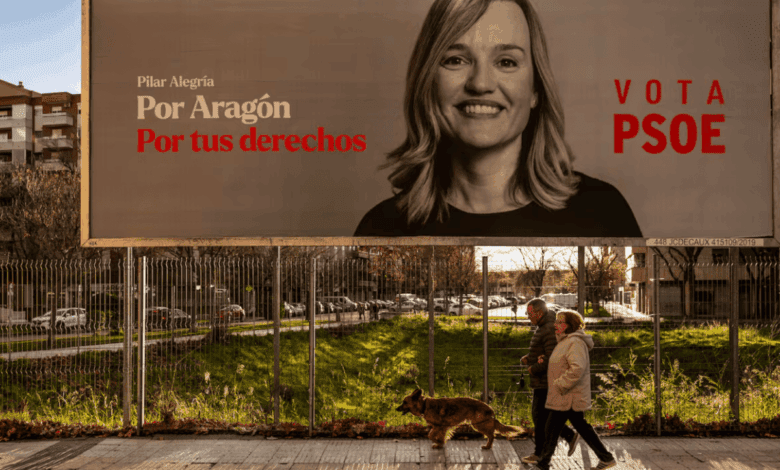
Socialist candidate Pilar Alegría makes no secret that her campaign centers on the issue of pensions. At meetings with residents, she highlights that payments have risen by more than 30% in recent years and the average pension in Aragon now exceeds €1,500. Her message includes criticism of the opposition, which, she claims, has failed to back initiatives to index benefits.
At the same time, a recent parliamentary vote in which opposition parties blocked yet another package of measures to protect pensioners has sparked new accusations. The Socialists are using this episode to their advantage, recalling periods when previous governments froze pensions. For many elderly voters, such details matter, as the stability of payments is a personal well-being issue.
Demographic factor
In Aragón, the proportion of citizens over 65 exceeds 22% of the population, and among voters this figure is even higher. Their participation in elections is traditionally high, which makes their opinion especially significant. That is why political parties shape their campaigns with this group’s interests in mind, promising to protect social guarantees and raise living standards.
However, even among pensioners there is no unity. Some of them are disillusioned with politics and believe that changes do not bring real improvements. Some fear that new parties could threaten the familiar order, while others feel that the old powers are unable to cope with current challenges. As a result, the fight for their votes is becoming increasingly intense.
Competition heats up
Polls show that among voters under 55, the Socialists are lagging not only behind the PP but also Vox. PSOE retains an advantage only in the 55–64 and 65+ age groups, and even then it’s slight. This allows the party to stay afloat, but offers little confidence for the future. Meanwhile, the PP and Vox are actively engaging with younger voters, presenting alternative solutions and criticizing current government policies.
Within PSOE itself, anxiety is growing: some supporters worry that even among pensioners, the idea that elections are pointless might take root. Skepticism is spreading: “all politicians are the same,” “nothing will change.” This creates an added risk for the Socialists, as losing even a small share of their loyal base could lead to a historic low.
Votes decide everything
On the streets of Zaragoza and other cities in the region, pensioners discuss not just pensions but also the state of healthcare, access to services, and opportunities for their children and grandchildren. For many, it’s important that their voices be heard and that promises aren’t just left on paper. These conversations often reveal dissatisfaction: long waits for doctors, rising prices, and uncertainty about the future.
Nevertheless, despite being tired of political battles, many elderly residents are still ready to go to the polls. They believe their participation can influence the outcome and prevent new forces from changing their way of life. For parties, this is both an opportunity and a challenge: to maintain the trust of those who judge by actions, not words.
Context and trends
In recent years, Spain has repeatedly seen situations where pensioners became the decisive force in elections. In 2023, a similar contest unfolded in several regions, with the older generation helping traditional parties maintain their positions. However, with each new electoral cycle, the influence of young voters is growing, making the political landscape increasingly unpredictable. The emergence of new parties and rising distrust toward established structures are pushing politicians to seek new approaches and rethink their strategies. Amid demographic shifts and economic challenges, the battle for pensioners’ votes remains one of the main intrigues of Spanish politics.