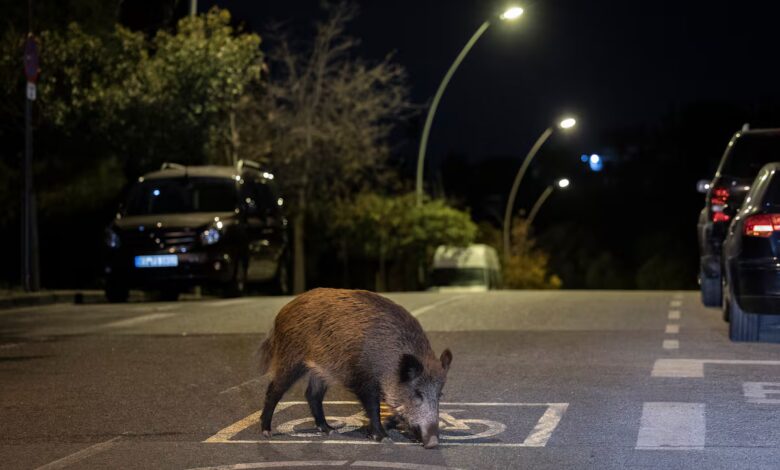
Spain’s pork market has come under scrutiny after African swine fever was detected in two wild boars in Collserola Natural Park near Barcelona. The news had an immediate impact on prices: the cost of live pork on the main Spanish exchange, Mercolleida, dropped by ten cents per kilogram. For an industry accustomed to stability, this sharp decline is one of the most significant in recent years.
In the first days after the outbreak was detected, anxiety gripped the sector. Farmers, meat processors, feed producers, and slaughterhouse owners found themselves in a difficult position. All of them are urging the Ministry of Agriculture to expedite talks on expanding exports outside the European Union. Their main hope is for so-called regionalization, so that trade restrictions apply only to the province where the infection was found, rather than the entire country.
Market under pressure
At an emergency session, Mercolleida’s pricing boards revised pork quotations. Now, a kilogram of premium live pork sells for €1.212, standard pork for €1.200, and fatty pork for €1.188. Sows have dropped to €0.480 per kilo, and 20-kilogram piglets are priced at €31 each. This is a substantial blow to producers’ incomes, especially in Catalonia, home to more than eight million pigs.
The situation is further complicated by the fact that many meat processing plants have started reducing their purchases, fearing further price drops and possible export restrictions. If the plague spreads to neighboring regions, such as Girona, the consequences could be catastrophic: the closure of markets in two provinces at once could cripple the entire industry.
Export and competition
Spain is a leading producer and exporter of pork in Europe, ranking just behind the US and Canada globally. The main buyers are EU countries as well as China, Japan, South Korea, and Mexico. Catalonia is the top producing region, exporting about 3 billion euros worth of products annually, two-thirds of which go to Europe, while the rest is shipped to international markets.
The outbreak has opened the door for competitors from Brazil and the US, who are eager to capture a share of Spain’s meat on the global market. At the same time, Spanish producers are counting on government support and a faster pace in negotiations with new trade partners.
Industry response
Unions and industry associations are demanding immediate action to contain the outbreak and prevent an economic crisis. Pere Roqué, head of the Association of Young Farmers of Catalonia, notes that stopping purchases by processors triggers a chain reaction that could impact the entire agribusiness sector.
A significant role in stabilizing the situation was played by the recent official visit of the King and Queen of Spain to China. During the visit, an agreement on regionalization was signed, allowing trade bans to be limited only to affected areas. Thanks to this, after the outbreak of the plague in Collserola, restrictions were imposed only on Barcelona, not the entire country. The industry now hopes that other countries—primarily the United Kingdom, Mexico, and Japan—will adopt a similar approach.
Catalan specifics
In Catalonia, most farmers operate under an integration model: companies provide feed, livestock, and veterinary services, while farmers supply facilities and labor. The main production areas are Lleida and the Vic plain in Barcelona. Experts emphasize that if the spread of the plague cannot be contained, a surplus of meat in the domestic market will lead to a further collapse in prices.
Ignasi Pons, Secretary of the Meat Industry Federation, notes that the outbreak was recorded in an area with few farms and slaughterhouses. This offers a chance to quickly localize the problem. Industry representatives are confident: the key now is to convince foreign partners of the safety of Spanish products and to prevent panic in the market.
Prospects and challenges
The Director of the Catalonia Pork Producers Association, Ricard Parés, believes that restoring confidence in Spanish meat is a priority for all market participants. New negotiations with foreign countries regarding recognition of the regionalization principle are expected in the near future. The outcome of these talks will determine how quickly the industry can overcome the crisis and return to previous export levels.