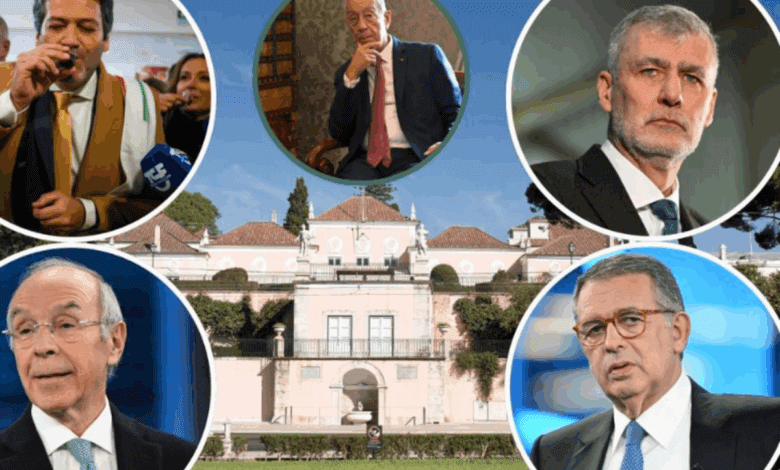
Portugal stands at a crossroads poised to reshape its political landscape for years to come. After a decade in power, Marcelo Rebelo de Sousa is stepping down as president, sending voters to the polls to choose his successor. This election is expected to be fiercely contested, with far-right candidate André Ventura, leader of Chega! (“Enough!”), considered the frontrunner for the first time in recent history. However, despite strong polling numbers, a first-round victory is unlikely—almost certainly leading to a runoff that promises to further intensify the political drama.
Rebelo de Sousa’s ten-year tenure has left a lasting mark on Portuguese society. His approachable and open style, willingness to engage with citizens, and readiness for unconventional actions made him stand out. He comforted victims of wildfires, dined with the homeless, and took selfies with people on the street. Though the presidency holds no real executive power, he became a symbol of stability and empathy. Now, as new faces enter the political stage, none seem to command the same charisma or public trust as the outgoing leader.
The Candidates and the Race
This time, eleven candidates are running for president at once. Among them are former ministers, military officers, politicians, public figures, and even artists. But all eyes are on four main contenders: André Ventura, António José Seguro representing the Socialists, Luís Marques Mendes from the Social Democrats, and the independent military officer Henrique Gouveia e Melo. Each of them stands for their own camp, values, and ambitions.
Ventura is a highly controversial figure. His rhetoric targets migrants and national minorities, and his remarks about not intending to be a “president for everyone” have already become a meme in Portuguese social media. Over the past years, his party Chega! has gone from a fringe movement to a real political force, and now Ventura dreams of using the presidency as a springboard for further advancing far-right ideas. His opponents, on the other hand, are building their campaigns on a call for unity and the defense of democratic values.
A challenge for democracy
The main intrigue is who will face Ventura in the second round. Socialist Seguro, a seasoned politician with an impressive track record, is capable of uniting centrists and the left. Marques Mendes, despite support from the prime minister, is losing ground due to scandals involving the conservative elite. Gouveia e Melo, a former admiral, became a national hero during the pandemic for his successful vaccination campaign, but his lack of political experience raises concerns.
For the first time in the country’s history, a woman—Catarina Martins from the Left Bloc—has appeared among the presidential candidates. Despite modest polling numbers, her participation is symbolic: Portugal has never had a female president, a fact that has not gone unnoticed. The remaining contenders, ranging from eccentric artists to trade union leaders, are unlikely to affect the outcome but do add color to the election.
The far-right phenomenon
The rise in Chega!’s popularity reflects a Europe-wide trend: frustration with traditional parties, fatigue with old faces, and a desire for change. Ventura deftly capitalizes on these sentiments, promising to ‘restore order’ and ‘give Portugal back to the Portuguese.’ His critics warn that behind his populist slogans lies a threat to democratic institutions and minority rights. For his part, Ventura makes no secret that he sees the presidency not just as a symbol, but as a strategic tool—he intends to use it to pressure the government and advance his agenda.
Nearly all other candidates have already stated that in the runoff they will support anyone but Ventura. This informal united front against the far right could prove decisive if Ventura fails to secure an outright majority in the first round. But even if he does not become president, his success will send an alarming signal to the country’s entire political system.
A new era
Portugal stands on the brink of change. The departure of Rebelo de Sousa marks the end of an era, and the upcoming elections could signal the start of a new political reality. The question is not only who will take the presidency, but also which path the country will choose: will it remain loyal to its democratic traditions or give in to the lure of radical change? The answer will become clear in the near future—and perhaps not just for Portugal, but for all of Europe.