A sharp change in weather conditions in Spain may impact the daily lives of millions of residents. After an unusually warm and sunny Semana Santa 2026, with temperatures in some regions reaching 30 degrees, meteorologists are warning of a powerful cyclone approaching from the west. This development is important for anyone planning trips, working outdoors, or relying on the weather in their daily activities.
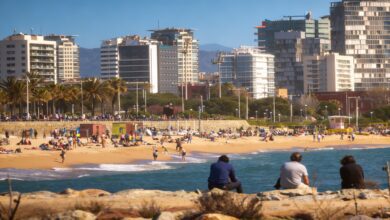
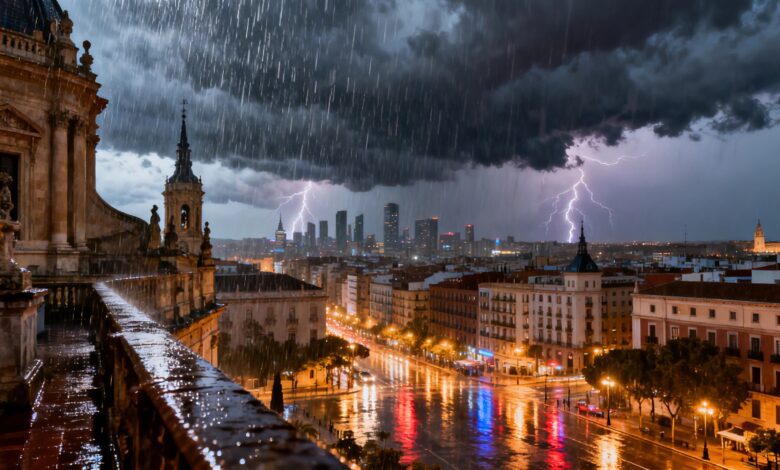
In recent days, Spain has enjoyed weather more typical of May than early April. According to Meteored, most regions have seen clear skies and record high temperatures. However, starting Monday, the situation will change: a humid and unstable air mass is moving in from the Atlantic, bringing rain, thunderstorms, and strong winds.
Atmospheric front
Meteorologists note that the exact nature of the approaching cyclone is still under debate. Some models point to the formation of a high-altitude depression (DANA), while others indicate a Borrasca Fría Aislada (BFA). In either case, both scenarios signal a sharp increase in rainfall and atmospheric instability. As Meteored reports, humid subtropical air from the ocean will intensify thundercloud development, and the temperature difference between atmospheric layers will lead to powerful convective zones.
Heavy rainfall is expected especially in Galicia, Extremadura, western Andalusia, and the western part of Castilla y León. As early as Monday night, these regions may experience downpours, thunderstorms, and strong gusty winds. Some areas are also forecast to see hail. According to russpain.com, up to 40 liters of precipitation per square meter may fall in southern Galicia during the first days of the cyclone, while western Andalusia and Extremadura could see up to 60 liters. In Huelva province, the total could exceed 80 liters.
Regional impact
The weather front will move in from the west, gradually covering the central part of the country. Throughout Tuesday and Wednesday, rain and thunderstorms will continue to spread, affecting not just agriculture but also transport infrastructure. Drivers should prepare for reduced visibility and slippery roads, while residents may experience temporary power outages due to storms.
In Galicia and western Andalusia, local authorities are already preparing emergency services for possible consequences. In some municipalities, temporary school closures and the cancellation of public events are being discussed. Meanwhile, farmers hope that the heavy rains will help restore soil moisture levels after a prolonged drought.
Forecast uncertainty
Despite meteorologists’ confidence in the approaching cyclone, long-term forecasts remain uncertain for now. According to Meteored, models differ in their assessments of the front’s trajectory and intensity after Wednesday. This adds further uncertainty for planning work and events in the second half of the week.
In recent years, Spain has already experienced similar weather events. For example, in spring 2023, a comparable cyclone caused severe flooding in Galicia and Andalusia, while in 2024, strong storms disrupted transportation in central regions. Such incidents are becoming increasingly common amid climate change, requiring local authorities and residents to be more prepared for sudden weather changes.