A new parliamentary committee has launched in Spain to analyze the consequences of mass migrant legalization. This decision has sparked wide public debate, as it directly affects security, social policy, and relations with European partners. Many residents are keen to understand how such measures could change everyday life and impact state resources.
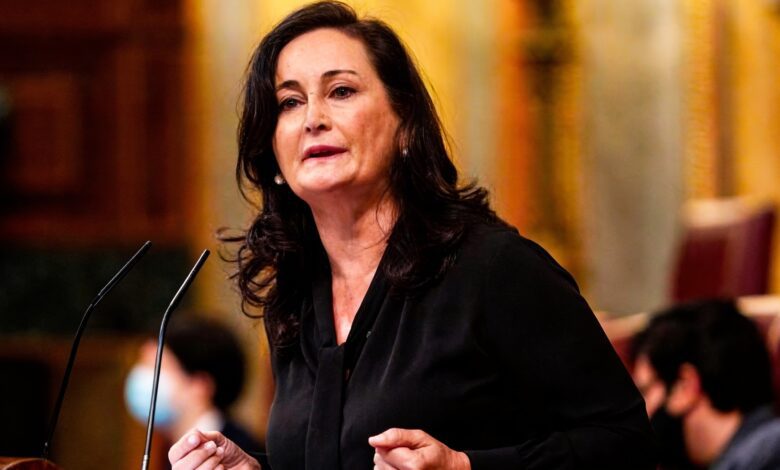
The committee was established within the National Security Commission and will operate as a joint group of deputies and senators. Edurne Uriarte from Partido Popular has been appointed as chair, with a majority secured thanks to Vox’s support and the absence of Junts and PNV members during the vote. This balance of power allows PP and Vox to steer the discussions and shape the final report.
Mandate and objectives
The committee is tasked with gathering comprehensive information on the legalization process initiated by the government. Members of the group can request documents from state agencies, as well as invite officials, experts, and representatives of organizations involved with migration to participate in discussions. The final report is due by the end of the current session, that is, by July, which aligns with the legalization timeline set to start in April and conclude on June 30.
At the same time, despite the approach of the start of the procedure, the authorities have not yet announced the exact launch date. This has drawn criticism from the opposition, which accuses the government of lacking a clear plan and adequate preparation. Minister of Social Protection Elma Saiz only stated that everything is proceeding according to schedule, without disclosing any details.
Risk assessment and disagreements
The text, supported by PP and Vox, contains a number of claims against the government. Specifically, it highlights that the decision on mass regularization was made without a thorough assessment of its impact on healthcare, education, housing, and social services. Additionally, it stresses that such a measure may reduce motivation for legal entry into the country and contradicts the principles of the European Pact on Migration and Asylum, which emphasizes border control and shared responsibility.
The document cites analysis by the National Center for Migration and Borders (CNIF), which estimates that the number of potential participants in the regularization could reach 1.3 million people—significantly more than the government’s forecast. This growth is attributed to possible cases of family reunification. The report also points to the risk of individuals associated with crime or terrorism entering the process, due to insufficiently strict requirements and challenges in background checks.
European response and domestic debates
In recent days, the situation has escalated following statements by the EU Commissioner for Home Affairs and Migration, Magnus Brunner, who reminded that legalization in Spain does not grant the right to move freely across EU countries. In such cases, individuals who leave will be returned to Spain. The country’s authorities have confirmed that this concerns only the right to work within Spain, not freedom of movement across Europe.
An example of documents that may be requested by the committee is the annual national security report for 2024. It notes that illegal migration can be linked to the funding of other criminal schemes, and may also be used by third countries to exert pressure on Spain amid geopolitical tensions. The report also discusses the risks of radicalization among vulnerable migrant groups and the possibility that migration flows could be used to infiltrate terrorist elements.
Context and consequences
The creation of such a committee reflects growing concern within Spanish society about sweeping changes to migration policy. In recent years, issues of legalization and integration of migrants have repeatedly sparked heated debate, and government decisions have provoked both support and protests. According to russpain.com, such initiatives could significantly affect resource allocation and social stability in the country.
Reflecting on recent events, it is worth noting that changes in the government and the adoption of high-profile decisions related to citizenship and amnesty have already had a noticeable impact on the political climate. For example, the reshuffling of the ministerial team and approval of key measures earlier sparked widespread public reaction and triggered new debates about the country’s future.
In recent years, Spain has experienced several waves of migrant legalization, each accompanied by debate over the impact on the labor market, social sphere, and security. In 2023, similar measures were discussed as arrivals increased and pressure from the EU mounted. At the time, issues of procedural transparency and the need to balance humanitarian and economic interests were also raised. Such developments continue to shape public discourse and influence government decisions.