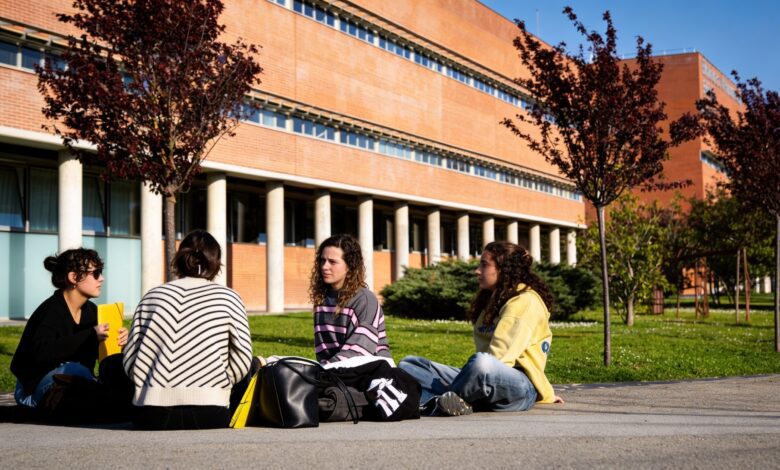
Catalan universities have seen a sharp increase in the number of students who have virtually stopped attending classes. According to a new study by the Universitat Autònoma de Barcelona (UAB), absenteeism in certain subjects has reached as high as 60%. The problem, previously associated with financial difficulties or the need to combine studies with work, has now become widespread and is causing serious concern among faculty.
Reasons for widespread absenteeism
Students cite various reasons for not attending lectures. Among the most common are the long commutes to the campuses, especially for those living outside Barcelona. For example, the journey from the city center to UAB can take up to 45 minutes, and for residents of the suburbs—even longer. Many say that if a lecturer simply reads material from presentations, attending becomes meaningless. Some students admit they prefer to spend their time in cafés or doing other activities, considering the lectures not interesting or useful enough.
Response from faculty and administration
Teachers note that even attempts to make classes more interactive do not always lead to increased attendance. In some groups, the average attendance rate does not exceed 50%, and in certain courses, it is even lower. According to UAB representatives, after the COVID-19 pandemic, students never returned to classrooms in the same numbers, despite the lifting of restrictions. The university believes one of the reasons is the spread of remote learning formats and a shift in attitudes towards the educational process.
Debate on education quality
The quality of teaching is actively discussed on social media and among students. Many point out that if the curricula were more dynamic and the teachers more engaged, motivation to attend classes would increase. Some students admit they only go to those subjects that genuinely interest them, considering the rest unnecessary for their personal development. Teachers, in turn, emphasize that deep understanding of the material is only possible through in-person participation in classes.
Search for solutions and new approaches
The UAB administration does not yet offer direct solutions, but emphasizes the need to improve career guidance for applicants and to better align future students’ expectations. The university believes it is important to build a system where attending classes has clear value for young people. Some faculty members associate solving the problem with fostering students’ personal responsibility and independence. The issue of widespread absenteeism is being discussed at other universities in the country as well. For example, at the Universitat Rovira i Virgili (URV), it is noted that in some courses attendance does not exceed 20%.
The topic of student autonomy and their attitude towards the educational process has already been discussed at Spanish universities. Recently, in Granada and Alicante, there was a discussion about the influence of parents on young people’s independence, which also affects the dynamics of attendance and academic engagement.
Overall, according to the UAB administration, increasing interest in on-campus education requires rethinking approaches to organizing the academic process, and making classes more relevant and connected to students’ real interests. Otherwise, the trend of declining attendance may only worsen.