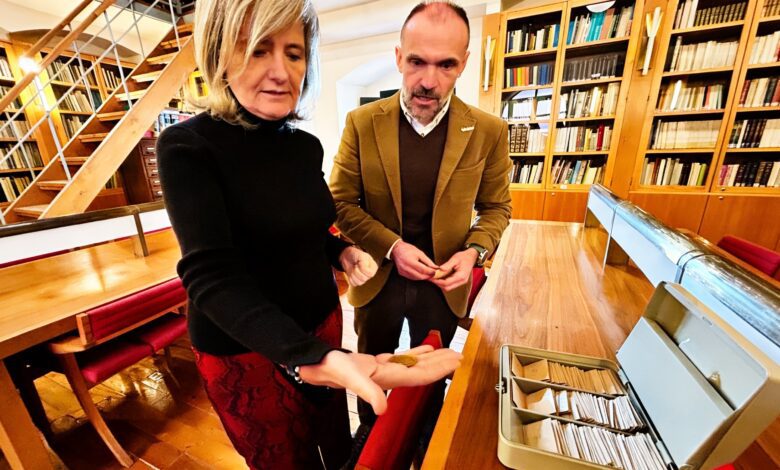
During the night on Saturday, a daring robbery took place at the Badajoz Archaeological Museum: unknown individuals entered the building from the rear, broke through a security grille, and smashed a display case where 149 gold coins from the famous Villanueva hoard were kept. According to the Extremadura authorities, the crime was carefully planned, and the damage to the region’s cultural heritage has already been described as irreparable.
The alarm was triggered at the security post around six in the morning, but by the time police arrived, the perpetrators had already fled. In the morning, the museum was cordoned off, forensic experts were working on site, collecting evidence and possible clues. The management promptly filed a police report, and regional authorities emphasized that all mandatory security measures had been observed. Nevertheless, the museum is closed to visitors for an indefinite period—until the investigation is complete.
Historical value of the hoard
The stolen coins were part of a hoard discovered in Villanueva de la Serena in 1987 during construction work at the site of the former Rialto cinema. Since then, the collection has been considered one of the most important finds in the region’s history. Last November, the hoard was moved from the municipality of Villanueva de la Serena to Badajoz for better preservation and public exhibition.
The hoard included coins minted between 1772 and 1822 at the mints of Madrid, Mexico, Lima, Potosí, Popayán, Santiago, Seville, and the New Kingdom. Among them are pieces from the reigns of Charles III, Charles IV, and Ferdinand VII, which gives the collection particular historical and numismatic value. According to experts, the coins were hidden in the early 19th century amid the political upheavals of that era.
Reaction and aftermath
In Villanueva de la Serena, where the hoard was discovered and had been stored for more than thirty years, the news of the theft was met with deep disappointment. Local authorities noted that the decision to transfer the collection to the Badajoz Museum was made to ensure its preservation and accessibility to the general public. Now, according to municipal representatives, hopes for better protection have not been realized. The exact value of the stolen coins has not been disclosed, but their importance for the history and culture of Extremadura goes far beyond monetary appraisal.
While police continue their investigation, the museum remains closed, and residents of the region await news on the possible return of the unique exhibits. The authorities emphasize that they are doing everything possible to recover the stolen items and restore justice. In the wake of this incident, debates over the protection of national heritage continue in Spain—just as after recent high-profile events in the cultural sphere, as covered in the article on public support for former prosecutor García Ortiz in Galicia (more on public reaction to high-profile incidents).
Reference
After its discovery in 1987, the treasure was declared state property and transferred for safekeeping to the Junta de Extremadura. In 1989, the coins were temporarily housed in the municipality of Villanueva de la Serena, where they remained until last November. The move to Badajoz was prompted by the need to provide better conditions for storage and exhibition. Now, the fate of this unique collection depends on the success of the investigation and the efforts of law enforcement authorities.