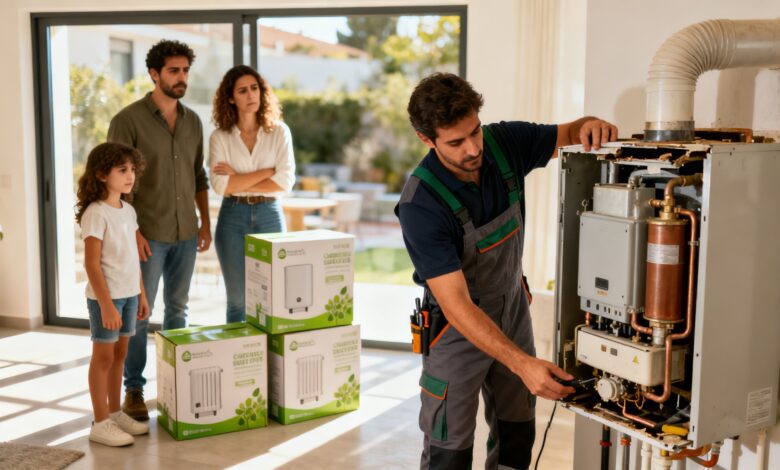
In the coming years, European homes face major changes: the European Commission has approved a clear timetable for phasing out gas and diesel boilers. It is already clear that traditional heating systems will become a thing of the past, and homeowners will need to prepare in advance for new requirements. By 2050, Europe plans to achieve zero emissions, and domestic heating is one of the key sectors slated for radical change.
Turning point
The updated EU energy efficiency regulation establishes that from 2025, support and subsidies for new gas and diesel boilers will cease. This decision aims to accelerate the transition to environmentally friendly technologies and make the market more transparent for consumers. Starting in 2030, all new buildings must be climate neutral, effectively ruling out the installation of gas systems in new projects. By 2040, the use of any fossil fuel boilers will be completely banned in all residential buildings across the European Union.
Timeline of changes
The transition to new standards will take place gradually. From 2025, subsidies for individual gas and diesel boilers will end. In 2030, the climate neutrality requirement for all new buildings comes into force. By 2040, the complete phase-out of fossil-fuel heating systems will be finished. This approach enables manufacturers, installers, and homeowners to adapt to new conditions without sudden shocks or major economic losses.
Choosing alternatives
Homeowners face the question: what should they replace outdated boilers with? The main alternatives are aerothermal systems and biomass. Aerothermal refers to a heat pump that uses the energy of outdoor air, even at low temperatures. The initial investment is higher, but when combined with solar panels, electricity costs are significantly reduced. Biomass means heating with pellets or firewood, suitable for private houses with enough space for fuel storage. This option is less expensive in terms of fuel and is CO₂ neutral, but requires regular maintenance and cleaning.
The choice between these systems depends on the type of housing and lifestyle. For city apartments with limited space, aerothermal systems are more commonly selected, while for suburban homes with garages and good ventilation, biomass is preferred.
Financial support
Unlike gas systems, the switch to eco-friendly technologies is supported by the EU and regional authorities. In 2026, the main focus is on subsidies for installing aerothermal systems: the amount of aid can range from 40% to 60% of the cost of equipment and installation, depending on the family’s income and the region. For example, installing a system costing €10,000 may end up costing €4,000–6,000. To obtain a subsidy, a complete set of documents is required, registration in the regional registry, and patience: payments usually arrive 6–9 months after submitting the application.
Step-by-step preparation
Switching to new systems requires a thoughtful approach. It is important to start by assessing the energy class of your home and actual consumption—the lower the class, the greater the potential savings. The next step is to request several offers from different companies, comparing not only the price but also efficiency, warranty conditions, and compatibility with solar panels. Do not sign a contract before studying all available regional support programs: application deadlines are limited, and document requirements may vary. It’s also crucial to plan ahead for maintenance: aerothermal systems require annual electrical inspections, while biomass systems need regular cleaning of the furnace and chimney.
This approach not only helps avoid unnecessary expenses, but also makes your investment in heating as resilient as possible to future changes in legislation. As Talent24h notes, a gradual transition to new standards allows for adaptation without sharp financial losses and helps maintain comfort at home.
The issues of transitioning to new technologies and state support are becoming increasingly relevant amid other major economic changes. For example, recent mass layoffs at large companies such as Nestlé have already raised concerns among thousands of families—you can learn more about this in the material on the consequences of restructuring in Spain’s labor market.