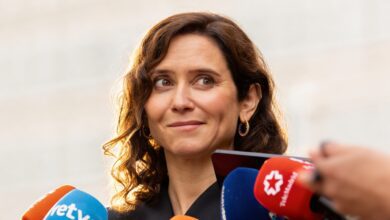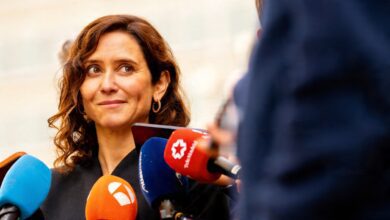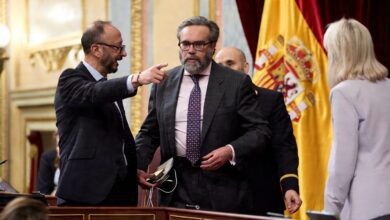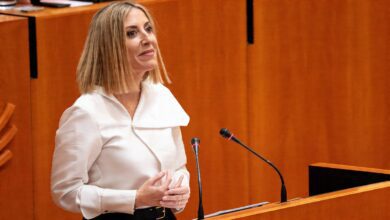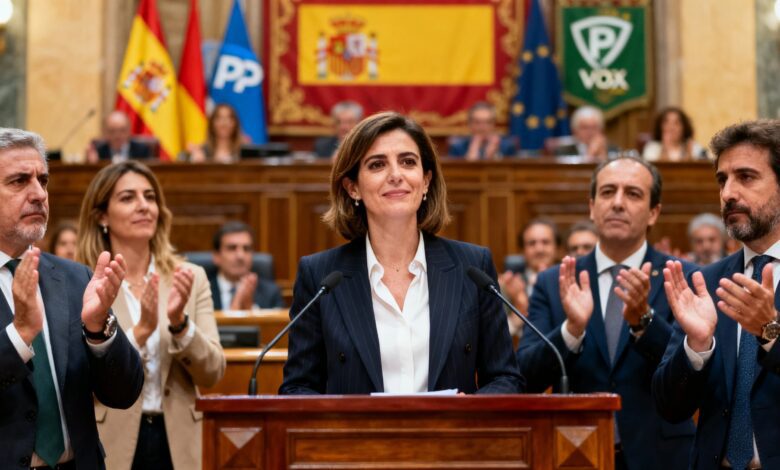
One of the most intense political intrigues of recent years in Extremadura has come to an end: María Guardiola has been officially elected President of the Junta, receiving the support of 40 deputies—the highest number in the history of the autonomous region. She was backed by representatives from the Partido Popular (PP) and Vox, made possible by a coalition agreement covering more than 60% of the region’s electorate.
The vote took place on the second attempt after the December elections. The result: 40 votes in favor and 25 against. This outcome not only cemented Guardiola’s leadership but also set a record for Extremadura. The inauguration ceremony is scheduled for Friday evening in Mérida, though it may be postponed in case of rain.
The coalition and terms of the agreement
The coalition agreement between the PP and Vox provides Vox with one vice-presidential position and two ministerial posts, as well as 61 agreed points and 74 measures, including the budget for the entire legislature. Despite formal consent, both sides remain cautious: political observers note that stability for the next four years is not yet assured.
During the parliamentary debate, Guardiola emphasized that the new government’s priority would be regional stability without conflicts or provocations. She called on Vox partners to focus on Extremadura’s future and leave behind the previous disagreements that had accompanied post-election negotiations.
Response from the opposition and challenges
Vox Vice President Óscar Fernández pledged loyalty and determination in joint efforts. Guardiola, in turn, stated that PP and Vox are different parties, but they are united by the goal of improving the lives of the region’s residents. She specifically emphasized that the agreement reached is not a sign of radicalism, but a democratic process that made it possible to overcome the political deadlock.
Guardiola voiced strong criticism of the Socialists, stressing that she does not need their approval for legitimacy. She also rejected claims that the PP had become a hostage to Vox, and reminded that it was the agreement that allowed the deadlock to be broken.
Key priorities and contentious issues
In her speech, Guardiola paid particular attention to migration issues. She declared she would not allow manipulation on this topic and advocates for a controlled distribution of migrants, rather than a chaotic approach, which, in her view, only aids the activities of criminal groups.
Among the new government’s priorities are increased healthcare funding, better conditions for teachers, tax benefits for childbirth and adoption, as well as the construction of 3,500 new social housing units. Guardiola recalled that during the previous legislature the Socialists built only 22 such units, accusing them of neglecting the region’s interests.
During the parliamentary discussion, Guardiola called on the opposition to respect the election results and not to obstruct the formation of the government. She emphasized that her task is to work honestly and responsibly for all residents of Extremadura, regardless of their political views.
Context and media response
The situation in Extremadura has also been discussed in the national media. In particular, issues of political integrity and pressure on journalists were recently raised on TVE, where host Silvia Intxaurrondo openly spoke about the challenges facing independent media — more on this can be found in the article about the statements of La Hora de La 1 host.