Freight rail service through the Rubí tunnel in Catalonia will be partially restored during the night of April 28 to 29. Adif announced the completion of the first phase of work to reinforce and stabilize the structure, which makes it possible to temporarily open the only alternative route for freight trains between Spain and Europe via the eastern corridor. The infrastructure had been closed since March 12, when authorities declared it unsafe for operation.
The forced closure of the Rubí tunnel dealt a serious blow to the region’s logistics. Trains bound for the Port of Barcelona and back lost their direct route. The alternative route, proposed the same day by regional development councillor Sílvia Paneque, involved a detour through Manresa, Lleida, and Sant Vicenç de Calders, adding 330 kilometers to the route and no less than five extra hours of travel. Most operators chose to transfer containers onto trucks in La Llagosta to deliver them to the port, which led to increased costs and delays.
Restrictions and temporary measures
Despite its reopening, the Rubí tunnel will not be able to operate at full capacity. For at least a month, traffic will run on a single track between Castellbisbal and Rubí-Can Vallhonrat: from Wednesday to Sunday, for 12 hours a day, and on Mondays and Tuesdays, for 21 hours. This schedule will remain in place until all works to reinforce the remaining sections are completed. Adif emphasizes that freight transport is being prioritized and has already notified operators of the new conditions.
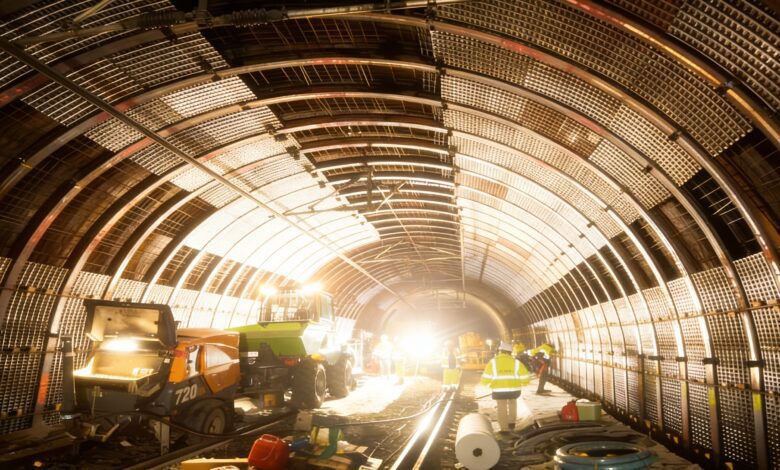
Since the beginning of the year, the tunnel has already caused transport disruptions twice. After the accident on the Gelida section in January, it was closed for two weeks, resulting in multimillion-euro losses for the sector. Since late January, emergency works have been underway to reinforce 123 meters of the more than 900-meter gallery. Individually manufactured metal trusses are being installed inside to serve as the base for a reinforced concrete ring. So far, stabilization of 60 meters has been completed, with foundation work and partial installation of structures finished on another 63 meters. The remaining stages—installation of metal elements, formwork, and concreting—will be combined with limited train operations.
Monitoring and next steps
Adif continues round-the-clock monitoring of the tunnel using more than 30 sensors to keep track of the stability of unrepaired sections. After the emergency work is completed, the next phase—major repairs of the remaining part of the gallery, currently in the tender process—is planned. The company notes that the need for urgent intervention was identified even before the Rodalies crisis, but work had to be expedited due to the deterioration of the facility.
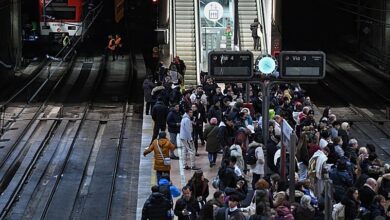
Problems with railway infrastructure in Spain are not uncommon. Recently, a nighttime accident at Madrid’s Atocha station paralyzed six Cercanías lines at once, also leading to widespread delays and changes in train routes. You can read more about the consequences of this incident in the report on the railway failure in central Madrid.