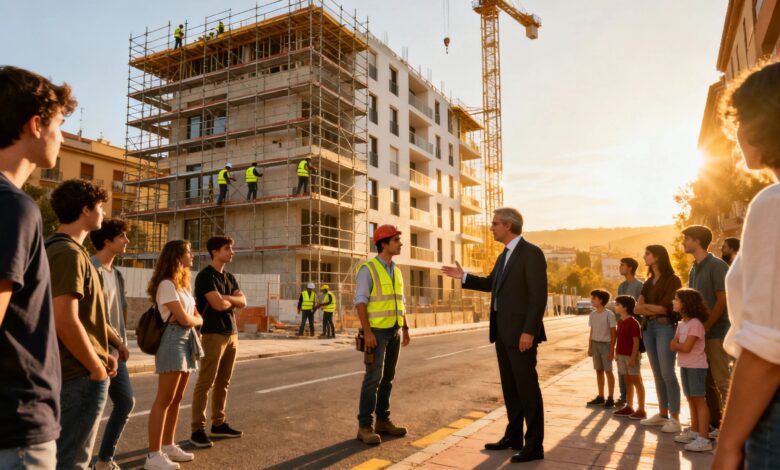
Spain has approved a new national housing plan for 2026–2030. Its main goal is to make housing more accessible for different social groups, especially young people and low-income families. The authorities aim not only to increase the public housing stock but also to change the approach to the allocation of social housing, in order to minimize speculation and ensure transparency of procedures.
Key areas
The plan provides for funding totaling 7 billion euros. This amount is distributed among three key areas: 40% will go towards expanding the public housing stock, 30% for the renovation and modernization of existing units, and another 30% for targeted support of the most vulnerable categories of citizens. This approach, as noted by Talent24h, should reduce the burden on family budgets and make independent living easier for young people.
Funding and partnership
Unlike previous programs, the new initiative involves more active participation by central and regional authorities. The state will cover 60% of expenses, while the remaining 40% will be financed by the autonomous communities. This not only increases the total volume of investment, but also takes into account the regional specifics of the housing market.
Control and transparency
One of the key innovations is the tightening of control over the use of funds and the allocation of housing. All real estate built or purchased with federal funds will be protected from being withdrawn from the state fund. An annual mandatory audit of the plan’s implementation effectiveness is introduced, along with new requirements for maintaining applicant registries and ensuring transparency in allocation procedures. In addition, regions are required to share data on the housing sector’s condition, which should increase trust in the system and reduce the risk of abuse.
Support for youth and rural areas
Special attention is given to supporting young people and developing rural areas. Renters below a certain age threshold are eligible for subsidies of up to €300, and those who decide to build or acquire their first home in towns with populations of up to 20,000 residents can receive payments of up to €15,000. This aims to encourage young families to move to smaller towns and villages and prevent the depopulation of rural regions.
Implementation and timeline
Technical consultations on the plan’s implementation will begin soon. It is expected that the main support mechanisms will be operational in the second half of this year. In the initial phase, all expenses will be covered by the federal budget to accelerate the program’s launch and ensure its sustainability.
Thus, the new State Housing Plan for 2026–2030 is becoming one of the most ambitious social policy initiatives in Spain in recent years. Its implementation aims not only to improve housing accessibility, but also to change the very logic of the housing sector, making it more transparent and responsive to the real needs of citizens.