Starting April 30, direct AVE trains between Madrid and Malaga will resume service. The railway infrastructure administrator Adif confirmed that, after more than three months of forced suspension, trains will run again on one of the two high-speed lines. The prolonged disruption was caused by a landslide near Álora, triggered by heavy rains in early February, which completely paralyzed rail traffic between the two cities.
Problems on the route began even earlier—after the tragic accident in Adamuz, which claimed 46 lives. However, it was the landslide on February 4 that proved critical: due to unstable ground and the inability to carry out repairs with heavy machinery on site, restoration timelines were repeatedly postponed. The reopening was initially scheduled for March 8, then for March 23, but challenging conditions forced Adif specialists to delay the launch until the end of April.
Temporary measures and consequences for the region
During the repair period, Iryo and Ouigo completely suspended their services between Madrid and Malaga, while Renfe arranged replacement bus transfers in Antequera. This sparked sharp criticism from the tourism industry and Andalusian authorities: according to hoteliers, losses from the prolonged shutdown amounted to hundreds of millions of euros, and the Semana Santa season was at risk. Despite these concerns, thanks to international tourist flows and additional routes between Madrid and Malaga via the airport, hotels in the region managed to partially offset the losses.
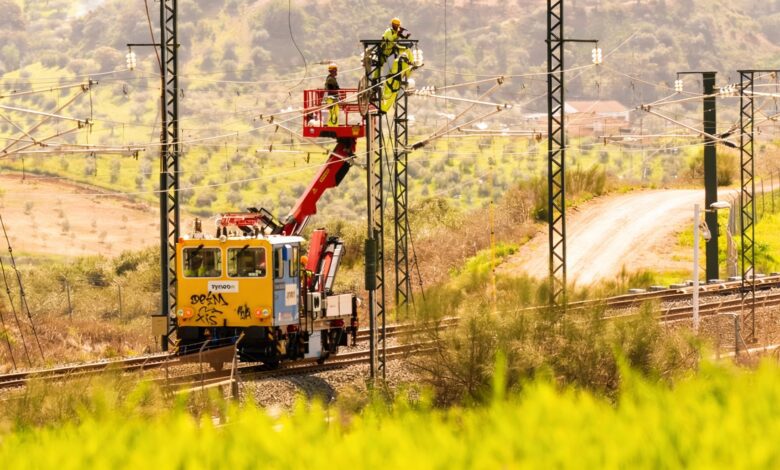
Minister of Transport Óscar Puente has repeatedly emphasized that the restoration of the line in Álora involves unique engineering challenges. The site employed 23 pieces of machinery and 75 specialists working around the clock, and for complete safety, the retaining structures had to be dismantled and rebuilt. According to the head of Adif, service will resume on only one track: the second will remain closed until the construction of a new protective structure is completed, which may take until the end of the year. This will result in minor delays but will allow direct service between the cities to resume.
Context and comparison with other disruptions
The situation with the restoration of high-speed service between Madrid and Málaga has become one of the most talked-about transport topics this spring. Authorities and businesses have debated the causes of the delays and the scale of the losses, while passengers experienced inconvenience at the height of the tourist season. Such incidents are not uncommon for the Spanish rail system: for example, a recent accident at Atocha station in Madrid also led to mass disruptions and delays on suburban lines.
According to Adif, work on the complete reconstruction of the section near Álora will continue until summer, and the full restoration of double-track service is expected by the end of the year. For now, all operators — Renfe, Iryo, and Ouigo — have already opened ticket sales for direct routes between Madrid and Málaga, despite the temporary restrictions.