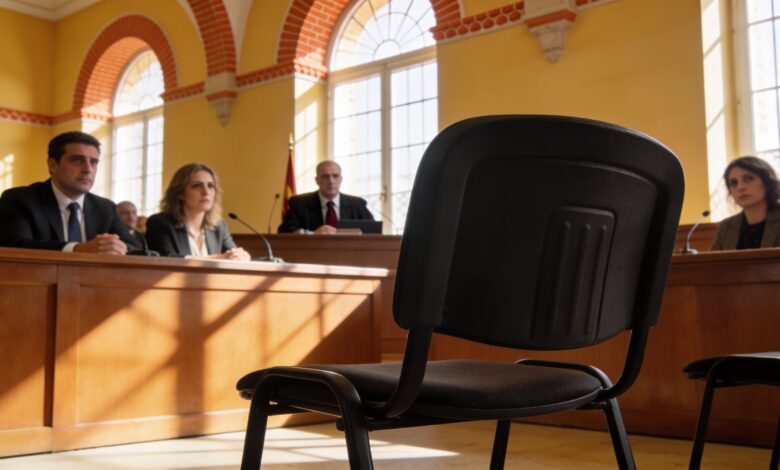
In Almería, the long-awaited trial in the case of the death of 18-year-old Ilyas Tahiri at the Tierras de Oria Juvenile Detention Center was scheduled to begin this week. However, despite an almost seven-year wait, the hearing is once again at risk of being postponed: the judge has suggested that the parties either reach a settlement or reschedule the session due to incomplete procedural documentation.
Lengthy delays and disputed decisions
Ilyas Tahiri, a Moroccan national, was restrained face-down on a bed with straps by six guards in July 2019. As a result, the young man died of suffocation—an incident captured on surveillance cameras. By protocol, such measures require a doctor’s authorization, but that day no medical approval was given. Despite public outcry and the involvement of the Defensor del Pueblo, the investigation dragged on: the case was closed as an “accident” three times, but each time reopened following complaints from the family and their lawyer.
Accountability and compensation
Four of the six guards, as well as representatives of Ginso—the company managing the center under contract with the Junta de Andalucía—were to stand trial. In addition, Junta officials were also being prosecuted. The insurance company Mapfre España has already paid the victim’s family compensation of €190,000. However, the family’s lawyer, Ángel Gómez San José, emphasizes that due to delays, the defendants are unlikely to face real punishment—only fines and temporary disqualification are being considered.
Gaps in the investigation
Judge Urko Liendo stated before the hearing that not all evidence was ready: some video recordings were missing in the required format, and not all witnesses and experts had been summoned to court. At the same time, according to the family’s lawyer, the judge had not requested the necessary materials over the past two years. The prosecution has already officially rejected a plea deal, but the fate of the trial will be decided only on the day of the hearing—it all depends on the position of the defendants and the family. If the parties agree to plead guilty under the article of involuntary manslaughter, a swift verdict is possible. Otherwise, the hearing will be postponed again.
Change in the Prosecution’s Position
Initially, the prosecution sought to bring charges of involuntary manslaughter against the management of Ginso and the Junta de Andalucía. Later, their position changed: the prosecution proposed reclassifying the case as the less serious offense of ‘negligent homicide’ with a penalty in the form of a fine. A total of 13 people were involved in the case, including the center’s management, security guards, medical staff, and representatives of the Junta. The family’s lawyer repeatedly appealed attempts to reduce the charges and to exclude the security guard who directly restrained Ilyas’s head during the fatal procedure from the list of defendants.
Details of the Tragedy
According to the forensic medical examination, Ilyas was restrained face down, which contradicts standard protocols: normally, when restraining minors, they are placed on their back unless there are special medical indications. In this case, the restraint was carried out according to the internal regulations of Tierras de Oria, which allows face-down restraint. Furthermore, the sequence of securing the straps was violated, which, according to the expert, could have increased stress and triggered fatal arrhythmia, especially considering the use of medication.
Footage from security cameras shows that Ilyas was brought into the room already handcuffed, did not resist, while the guards used excessive force. Within four minutes of the procedure starting, the young man stopped breathing, but none of the staff checked his condition. This incident prompted a discussion about the safety of minors in closed institutions and a review of restraint protocols.
Context and consequences
The story of Ilyas Tahiri has once again raised the issue of harsh measures used in Spanish juvenile centers, especially in institutions run by private companies under government contract. Following the tragedy, the Defensor del Pueblo recommended a total ban on face-down restraint, and Ginso came under scrutiny due to other incidents. In Spain, the issue of protecting vulnerable groups in closed institutions remains acute: previously, the death of María Caamaño Muñes also sparked public outcry, as noted in in a report on the fight against rare diseases, has changed its approach to providing medical care for children.