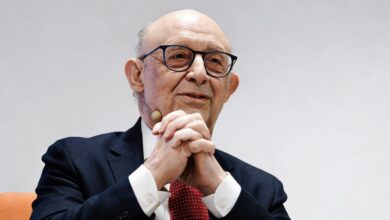
At an event in Madrid organized by Fundación FAES with the support of the Ministry of Foreign Affairs, new security challenges for Spain were discussed. The focus was on the consequences of criticism of the US by the Spanish government and growing internal divisions within the country. Against the backdrop of the Pentagon’s internal letter about a possible suspension of Spain’s NATO membership, forum participants openly spoke about risks to national defense.
Internal Divisions and External Threats
According to several military figures and analysts, Spain is facing serious problems in its defense sector. Retired General Rubén García Servert noted that the country’s armed forces are experiencing a shortage of resources and personnel, while society remains divided in the face of external threats. He stressed that part of the population, in his view, takes positions that may be perceived as support for the country’s adversaries. As an example, he recalled the events of 711, when the Iberian Peninsula was invaded.
The general also identified five key threats for Spain: the likelihood of armed conflict, hybrid warfare, terrorism, the rise of organized crime, and uncontrolled migration. He expressed concern that criticism of allies, primarily the United States, could weaken the country’s defense position. According to him, if Washington decides not to respond to threats against Spain, this will lead to serious security consequences.
Spain’s Role in a Changing World
Experts note that amid the weakening of the traditional world order and the rise of China, Europe is being forced to reconsider its security strategies. According to Mira Milosevich from Elcano, Spain has an opportunity to strengthen its position on the international stage but faces internal challenges and a lack of consensus. At the same time, the role of middle powers such as Spain is becoming increasingly prominent, especially regarding Middle East issues and relations with China.
Luis Simón from Elcano believes the situation is not as critical as some members of the military describe it, while Florentino Portero from Fundación Civismo emphasizes that Spain’s geographic location and historical experience create unique challenges within the EU. Nonetheless, the general conclusion among forum participants is that in the next 20 years, Europe will have to rely on the US for defense, since building a unified European security system will take time.
Discussion on spending and alliances
The issue of increasing the defense budget remains controversial. Despite the refusal of Pedro Sánchez’s government to raise military spending to 5% of GDP, military experts are certain that defense expenditures will grow, inevitably affecting the level of social guarantees. During the discussion, there was also a question from Andrew Hill of the Royal United Services Institute: how will Spain respond if Morocco acquires nuclear weapons? There was no answer to this question, but it became a symbol of the uncertainty the country is facing.
The discussion of security issues is taking place against the backdrop of other pressing topics for Spain. For example, the country recently faced a sharp cold snap, which also attracted the attention of authorities and residents. More about the consequences of these weather changes can be found in the article on how temperatures in five regions of the country dropped to -12 ºC in just one day.