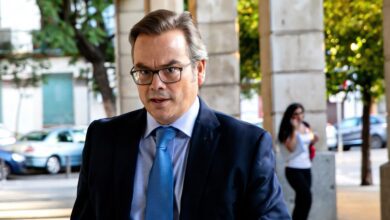
The Madrid Prosecutor’s Office has officially petitioned the court to close the investigation against Begoña Gómez, the wife of the head of government, and her assistant. The agency found no evidence of a crime, but acknowledged that certain actions could raise concerns regarding ethics and transparency. In its 40-page conclusion, the prosecutor emphasizes that the issues at hand do not fall under criminal prosecution, but require political and regulatory assessment.
Prosecutor’s arguments
The case files note that the situation surrounding the prime minister’s wife and her adviser has repeatedly raised questions during the investigation. The prosecutor underscores that family ties cannot automatically be considered grounds for suspicion. Nevertheless, the documents point to the need for clear regulation of the roles of spouses and relatives of high-ranking officials in order to avoid conflicts of interest and suspicions of abuse.
The prosecutor sent two separate petitions: one to Judge Juan Carlos Peinado, who had earlier suggested referring the case to a jury court, and another to the panel of judges reviewing the appeal. The final decision will be made by the 23rd section of the court. If the court sides with the prosecutor’s position, Begoña Gómez will not stand trial on corruption charges.
Officials and opposition respond
Since the start of the investigation, the authorities have consistently stated its political motives. Prime Minister Pedro Sánchez has repeatedly emphasized that his wife has done nothing illegal, describing the process as an attempt to put pressure on the government through personal attacks. In interviews and public statements, Sánchez claimed that “there is no case” and all accusations are “false,” aimed at discrediting his family.
At the same time, some political forces, including PNV and Partido Popular, insist on the need for stricter regulation of the status of spouses of government leaders. Representatives of these parties stress that even in the absence of a criminal offense, certain actions may be inappropriate from the perspective of public morality and transparency standards. In particular, there have been calls in parliament to develop new rules to prevent similar situations in the future.
Details of the case and the prosecutor’s stance
Apart from Begoña Gómez, the case also involves her aide Cristina Álvarez, appointed in 2018. The prosecutor’s office found no evidence of illegal conduct on her part, noting that all official duties were fulfilled in full and any additional assignments did not harm the budget. The agency emphasizes that the lack of clear regulation of the roles of aides to spouses of high-ranking officials creates grounds for disputes, but not for criminal prosecution.
The question of whether new regulations are needed for officials’ spouses and relatives remains open. The government believes that current oversight mechanisms are sufficient and that Begoña Gómez does not hold an official position. Nevertheless, the debate about acceptable boundaries continues, and the topic is attracting significant public attention.
Context and developments
As previously noted by russpain.com in its analysis of the protracted investigation, the case of Begoña Gómez has become one of the most discussed in Spanish politics in recent years. Despite the lack of evidence of a crime, the very fact of the inquiry and the public discussion of the prime minister’s spouse’s role has influenced perceptions of authority and the functioning of the judicial system.