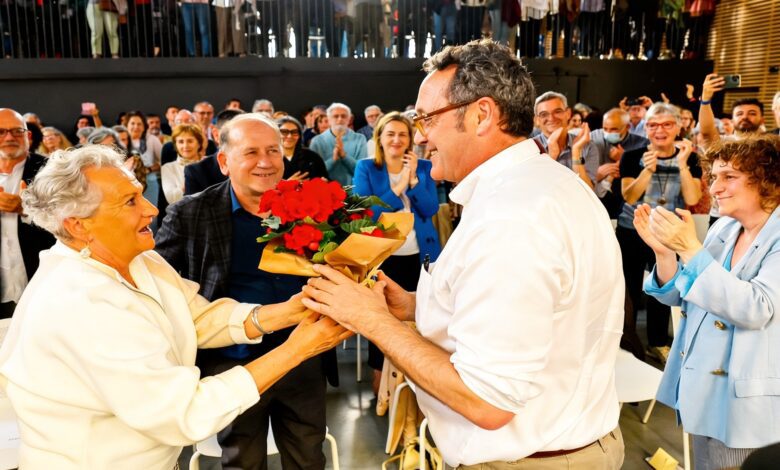
A public event was held in Santiago de Compostela in support of former State Attorney General Álvaro García Ortiz, who was sentenced by the Supreme Court in November to a two-year ban from holding office and a fine of 17,200 euros for disclosing confidential information. The event took place at the Casa das Máquinas and brought together university professors and representatives of the region’s cultural sector. Organizers described the gathering as an “act of recognition” for “a friend, neighbor, fellow countryman, and former prosecutor who worked on issues of ecology and collective memory.”
Álvaro García Ortiz himself, speaking publicly for the first time since the verdict, emphasized that he considers what happened to be a blatant injustice, but does not want to be seen as a victim. According to him, the situation has been difficult on a personal level, but he does not consider himself deprived, since he held a responsible and privileged position. A video of his speech was distributed by Cadena SER.
Reaction and support
García Ortiz said he has already filed a complaint with the Constitutional Court, believing that the Supreme Court made an unsubstantiated and arbitrary decision, ignoring exculpatory evidence. He stressed that what happened should not evoke pity, but instead serve as a catalyst for change in the system. The event was attended by both legal colleagues and representatives from Galicia’s cultural community.
This is the first public appearance of the former prosecutor since the verdict. In January, he attended the presentation of a manifesto at the Madrid Ateneo, where more than 150 lawyers, including former Supreme Court judges and prominent public figures, expressed disagreement with the court’s decision. The document stated that the sentence was based on suspicion and undermined the presumption of innocence.
Context and public reaction
The situation surrounding the García Ortiz case has sparked broad response among the professional community and the public. Many see this case as an example of controversial judicial practice, raising questions about transparency and fairness in Spain’s justice system. Such cases, where court decisions prompt a mass reaction, are not uncommon: for example, previously in Madrid, the closure of the Innova Academy also led to collective lawsuits and protests, as detailed in the article on the consequences for students and teachers.
According to Cadena SER, support for García Ortiz from colleagues and representatives of the cultural sector remains significant. Questions about the criteria and transparency of judicial decisions continue to be discussed both within the professional community and beyond.