The CaixaResearch Institute has officially opened in Barcelona—the first research center in Spain fully dedicated to immunology. The new institute, established with the support of Fundación La Caixa, received initial funding of 100 million euros and has already begun work with six scientific groups. Over the next few years, their number is expected to grow to 40, which should significantly strengthen the city’s position in the biomedical sector.
Focus on immune mechanisms
The main objective of the center is to study the functioning of the immune system and its role in the development of various diseases, including cancer, infections, and neurodegenerative disorders. Research will be conducted using a unified methodology to identify common biological mechanisms underlying different pathologies. The institute’s leadership emphasizes that understanding the processes regulating immunity paves the way for more precise and long-lasting treatment methods.
The institute notes that immune system malfunctions can lead both to insufficient protection against infections and tumors and to excessive responses to harmless stimuli—as seen in allergies and autoimmune diseases. Finding ways to restore immune balance and control its responses remains one of the most challenging tasks in modern biomedicine.
Opening attended by top officials
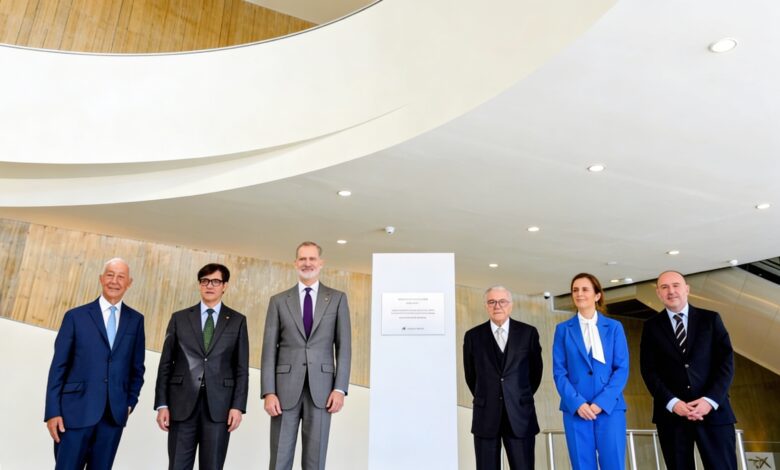
King Felipe VI, Catalonia President Salvador Illa, Health Minister Mónica García, and Fundación La Caixa President Isidro Fainé attended the opening ceremony. The foundation’s leadership announced its intention to make the institute an international benchmark in immunology and emphasized that while the first results will take time, the project has all the necessary resources and expertise.
The center building is located at the foot of Collserola, opposite the Science Museum, and covers 20,000 square meters. In the coming years, up to 500 specialists will work here, 425 of whom will be scientists. Ten million euros have already been allocated to attract new talent and equip laboratories. The plans include not only scientific development, but also active participation in public discussions about the role of science, especially amid the spread of fake news and the growing influence of artificial intelligence.
Part of the biomedical cluster
The CaixaResearch Institute has become a new link in the extensive network of research institutions supported by Fundación La Caixa. This cluster includes IrsiCaixa (infectious diseases and immunity), Vall d’Hebron Instituto de Oncología (VHIO), ISGlobal (global health), Barcelonaβeta Brain Research Center (Alzheimer’s disease), Institut de Recerca Sant Joan de Déu (pediatrics), as well as the Gulbenkian Institute for Molecular Medicine in Portugal. In total, more than 1,500 researchers work within the foundation’s ecosystem, with a combined annual budget exceeding 200 million euros.
Barcelona continues to strengthen its status as one of the leading biomedical centers in Europe. The city already brings together major hospitals, universities, and companies in the sector. Fundación La Caixa allocates about 20% of its annual budget to healthcare, and by 2026 this amount will reach 147 million euros. The foundation also runs its own programs to support research projects and develop scientific potential, including INPhINIT scholarships for doctoral students and Junior Leader for young scientists.
Context: new approaches in treatment
The opening of the CaixaResearch Institute coincides with growing interest in personalized therapy methods. For example, a personalized mRNA vaccine for patients with pancreatic cancer was recently tested in the US, allowing nearly half of the participants to live more than six years — according to data cited by russpain.com. Such developments highlight the importance of fundamental immunity research for future medical solutions.