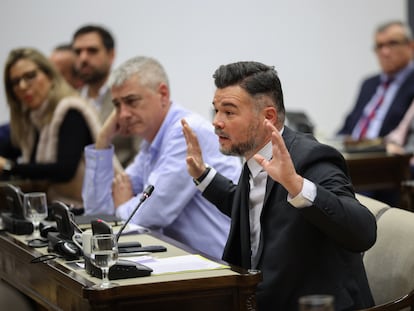
The situation in Extremadura is reaching a new level of tension: the outcome of negotiations between Partido Popular (PP) and Vox will determine who will lead the regional government. For residents of the region and for all of Spain, this is more than just another change of power — it’s about a potential shift in the political balance that could affect the distribution of power in the country. With no party having secured an absolute majority, every vote becomes crucial, and the outcome of the talks could set the tone for future national alliances.
In the coming days, all eyes are on the actions of the regional Assembly president Manuel Naharro, who is wrapping up a series of consultations to identify the candidate for the head of government. It has already been announced that the official candidate will be named on February 10, and most likely it will be the current president, María Guardiola. However, even this formal step does not guarantee calm: difficult negotiations lie ahead, and their outcome will determine the vote on March 3.
Critical moment
In the latest elections, Partido Popular secured 29 seats in the regional parliament, accounting for 43.18% of the votes. To achieve a majority in the first round of investiture, the party is short four votes, which can only be provided by Vox. The party holds 11 mandates and has the support of 17% of voters. Without Vox’s backing, the chances of success are minimal, and political uncertainty could drag on for weeks.
If Guardiola fails to secure the necessary majority in the first vote, a second round will be held 48 hours later, where a simple majority will suffice to win. In this case, even an abstention by Vox could allow the PP candidate’s election. However, if the party chooses to vote against, the region faces new elections, which could be scheduled for May 3. Such a scenario could lead to even greater political instability and further delay the government formation process.
Talks without compromise
Negotiations between the PP and Vox have reached an impasse. Vox representatives, particularly their spokesperson in Extremadura, Óscar Fernández Calle, have publicly stated their firm stance and unwillingness to make concessions. On social media, they declare the party will “not take a single step back,” further fueling tension ahead of the upcoming vote.
Internal party disagreements and the absence of a unified coalition strategy are creating an atmosphere of uncertainty. At the same time, both sides realize that failed negotiations will trigger new elections—a risk of losing influence and voter trust. In these conditions, even a small concession could be decisive, but so far neither side is ready to compromise.
Possible scenarios
If the first vote fails and no agreement is reached between the parties, the region could find itself in a political vacuum. New elections would not only prolong the process of forming a government, but could also lead to a shift in power if voters decide to punish one of the sides for the drawn-out crisis. This scenario has already been seen in other regions of Spain, where lengthy negotiations have led to unexpected results in repeat elections.
On the other hand, if Vox chooses to abstain in the second round, this would allow the PP to form a government, but relations between the parties would remain tense. In such a case, unstable alliances and frequent political crises are possible, which would negatively impact regional governance and the implementation of key projects.
Context and consequences
The situation in Extremadura resembles similar political crises that have occurred in recent years in other autonomous communities in Spain. For example, in Madrid and Catalonia, there have been repeated instances when government formation was delayed due to a lack of majority and complicated negotiations between parties. In some cases, this led to new elections and unexpected changes in the balance of power.
In 2023, a similar scenario unfolded in Castilla y León, where negotiations between the PP and Vox were also marked by tough statements and threats of new elections. A compromise was reached at the last moment, but tensions between the parties lingered for a long time. Such situations illustrate just how fragile the political balance can be in regions where no party holds an absolute majority.