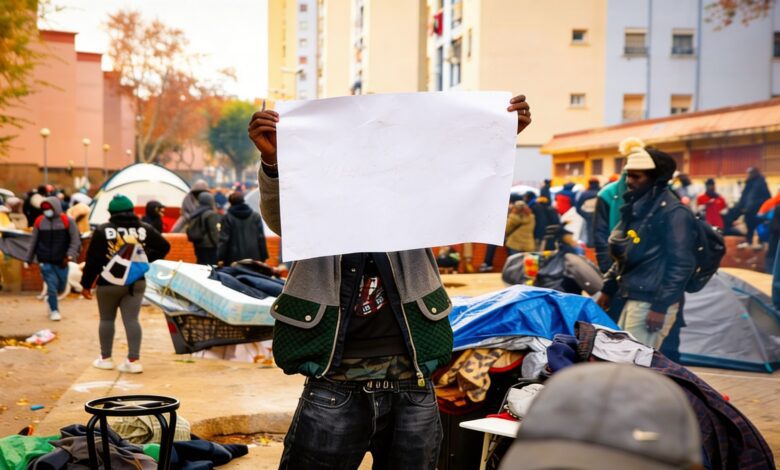
The controversy over the eviction of migrants from the former B9 institute in Badalona became one of the most talked-about events of the winter in Catalonia. For Spaniards, this story is significant not only due to its scale—with hundreds left homeless—but also because of how authorities respond to such crises. Decisions made by the municipality have already impacted the region’s social policy and sparked criticism from public organizations and the prosecutor’s office.
In December of last year, a Barcelona court approved the eviction of more than 400 migrants living in the former B9 institute building. Most were from Sub-Saharan African countries. Badalona mayor Xavier Garcia Albiol had long sought to free up the building, linking it to rising crime in the area. However, as reported by El Pais, city authorities did not prepare any alternative for those evicted, despite the court order to follow the homeless assistance protocol.
Prosecutor’s response
The Catalan prosecutor’s office took a tough stance, accusing Badalona’s administration of violating the court order. According to an official document obtained by El Pais, the municipality not only failed to offer temporary housing, but also did not provide any minimum support for people left vulnerable. Many of the former B9 residents were forced to sleep under a bridge on the C-31 highway, spending weeks in the cold and without basic necessities.
The municipality admitted in court that it does not have a special protocol for working with homeless people and those on the verge of social isolation. Instead, officials referred to an internal ‘methodology’ involving stages of identification, assessment, referral to resources, and follow-up. However, according to the prosecutor’s office, even this procedure was violated: none of those evicted received real assistance or access to temporary shelters.
Lack of infrastructure
The situation worsened in spring 2024 under Albiol, when the only municipal shelter, Can Bofí Vell, intended for emergency accommodation of the homeless, was closed. Since then, Badalona has had no official facility for temporary housing for people left in the street. Community organizations and Catalonia’s regional authorities have repeatedly called for the shelter to reopen, but so far with no success.
While city authorities did nothing, the regional government and nonprofits stepped in to support some former B9 residents. However, many remained without shelter, and five people died on the streets of Badalona over the winter. According to El Pais, the lack of systemic support and the closure of the shelter were key factors in the tragedy.
Political consequences
The eviction story of B9 sparked widespread public response and led to renewed demands for changes in municipal social policy. In Catalonia, the debate intensified over the need for a unified protocol to assist the homeless and expand the network of temporary shelters. Many experts believe that similar crises may recur unless authorities change their approach to addressing the needs of vulnerable groups.
In the context of debates on social reforms, it is worth noting that Spanish authorities recently decided to extend the application deadline for compensation to victims of the dictatorship. This measure affected thousands of families and marked an important step in safeguarding citizens’ rights. More details on the new compensation rules can be found in the article on expanding aid for victims of the regime.
Context and similar cases
In recent years, Spain has repeatedly faced situations where mass evictions have led to social crises. In 2023, after the closure of a large temporary camp for migrants in Madrid, hundreds of people were left on the street without support. Similar issues were observed in Valencia, where, after the dismantling of informal settlements, local authorities failed to promptly provide temporary housing. These incidents highlight the need for a systemic approach to social protection and emergency accommodation for vulnerable populations.