The situation with Spain’s railways has come under the spotlight again after another disruption on the C2 commuter line in Bilbao. For thousands of residents in the region, this is more than just an inconvenience – train delays have a direct impact on daily routines, jobs, and plans. At a time when the transport system is expected to guarantee reliability and safety, such incidents inevitably raise questions about the effectiveness of management and the technical condition of the infrastructure.
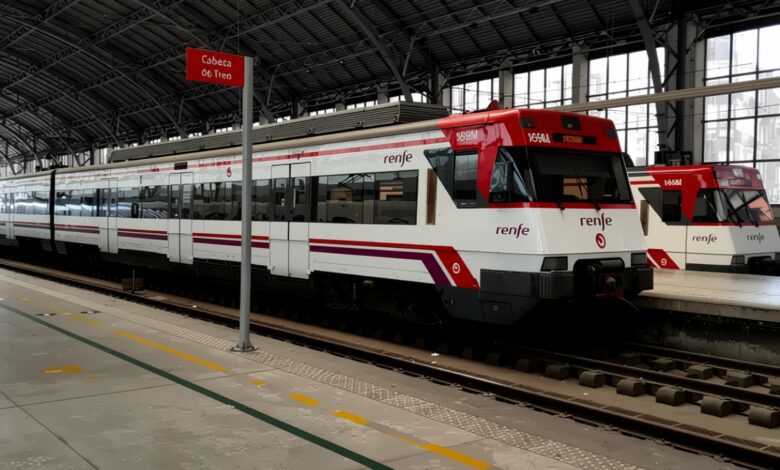
Tuesday morning brought an unpleasant surprise for passengers traveling between Ortuella and Muskiz: train service was interrupted due to a sudden loss of power in the overhead line. The rail infrastructure administration had to quickly set up an alternative bus route to ensure people could still get to work or school. Although the issue was fixed in less than two hours, the aftereffects lingered – many passengers were late, and confidence in the system was shaken once again.
Consequences of the disruption
While residents of Bilbao tried to adjust their routes, pressing issues were being discussed at the other end of the country. On the high-speed rail line between Madrid and Barcelona, the maximum permitted speed was raised—first to 230 km/h and, as the transport authority promises, plans are underway to restore the previous 300 km/h. This became possible only after urgent repairs triggered by the discovery of a crack in the rails overnight Sunday. Incidents like this highlight just how vulnerable even the most modern part of the country’s railway network remains.
Meanwhile, the investigation into the recent disaster in Adamuz continues. The Rail Accident Investigation Commission has focused on a defect in a welded joint, which, according to preliminary data, caused the train to derail. Questions about the quality of work and track maintenance oversight are growing louder, and public discontent is on the rise.
Authorities’ response
Amid mounting criticism, the transport minister found himself at the center of political pressure. Facing calls for resignation and accusations of incompetence, he refused to appear before Congress on the issue of public transport support, but pledged to provide explanations in the Senate. At the same time, Catalan authorities are demanding that railway operators and infrastructure companies take responsibility for the string of failures, while opposition parties insist on personnel changes.
At the same time, Renfe reports that commuter trains are operating as usual despite occasional disruptions and emphasizes that around 150 buses have been provided for passengers on affected routes. However, speed restrictions remain in place on the Seville–Malaga line due to the risk of a wall collapse, adding further tension to an already difficult situation.
Public response
On social media and in the streets, discussions focus not only on technical issues but also on the human side of the incident. In Huelva, preparations are underway for a memorial ceremony honoring the victims of the Adamuz accident, which will be attended by King Felipe VI and Queen Letizia. For many Spaniards, this tragedy is a stark reminder that railway problems are not an abstract topic, but a matter of life and safety.
Overall, the string of incidents on Spain’s railways once again raises concerns about service quality, transparency in investigations, and managerial accountability. While some are waiting for the promised improvements, others are calling for immediate change. Each new failure only reinforces the sense that the system is in urgent need of major modernization.