Five seconds—that’s how much time the train driver had as he traveled through Gelida in the province of Barcelona to try to stop before the concrete barrier. On that fateful Tuesday, when a dramatic incident unfolded on the railway tracks, no one could have guessed that a routine shift would end in tragedy. There were four people in the cab: experienced drivers and a trainee, for whom this day would be the last.
According to the initial findings of the railway accident investigation commission, analysis of the black box revealed that there was almost no time to react. The concrete wall, installed in an L-shape, did not collapse completely onto the rails—strong winds had tilted it, leaving it hanging over the tracks at a 45-degree angle. This created a deadly trap that no one could have foreseen.
Seconds to decide
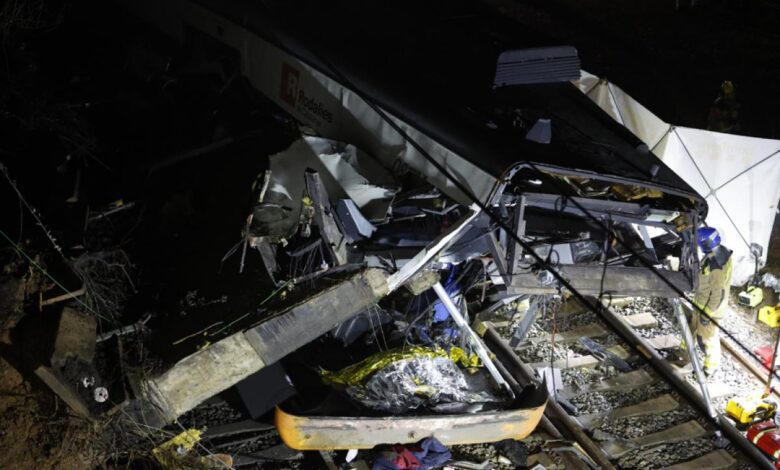
The locomotive was moving at about 60 kilometers per hour. When the driver spotted the obstacle, only five seconds and roughly 50 meters remained before impact. In that brief moment, he tried to brake, but there was virtually no chance to avoid the collision. The train crashed into the concrete structure, which literally pierced the cab.
As a result of the collision, trainee driver Fernando Huerta was killed. The three other drivers in the cab sustained injuries of varying severity. For everyone in that carriage, those seconds were the most terrifying of their lives.
Causes and details
The commission notes that weather conditions played a key role. The strong wind raging that day not only tilted the concrete wall, but also made it virtually invisible to the train driver until the very last moment. The wall was not lying on the tracks, but was hanging over them, creating the illusion of a clear passage. This circumstance proved fatal.
The report emphasizes that the data analysis is ongoing. Final conclusions will require comparing the information with the control center records, which are yet to be obtained. However, it is already clear that there was practically no time for rescue.
Safety concerns
The tragedy in Gelida once again raises questions about the safety of railway infrastructure. Why was the concrete structure so vulnerable to the elements? Could its collapse have been prevented, or at least the danger discovered in time? These questions remain unanswered but demand utmost attention.
While the commission continues its work, railway workers and passengers nationwide wonder: how well protected are they from such accidents? Sometimes, only a few seconds separate life and death.