Solar Activity and Its Consequences for Europe
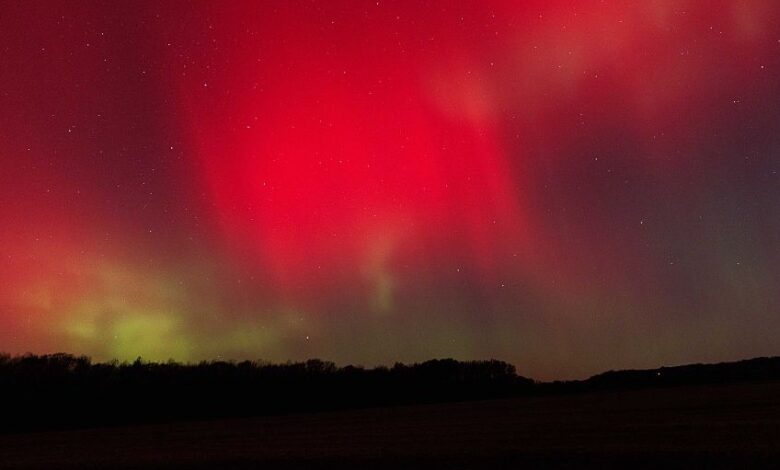
In early November 2025, residents across various regions of Spain witnessed an unusual phenomenon—bright streaks of light appeared in the night sky, resembling the northern lights. Such displays are typically seen only in northern latitudes, but this time they were observed even in Andalusia and the Balearic Islands. The cause was a powerful solar flare that released charged particles toward Earth. When these particles reached the atmosphere, they not only created visual effects, but also sparked discussions about possible risks to modern technology.
What Are Geomagnetic Storms and How Are They Measured?
Geomagnetic storms occur when solar emissions collide with the planet’s magnetic field. Their strength is measured using the international Kp index, where values range from 0 to 9 to indicate the degree of disturbance. This time, experts recorded values near the upper end of the scale, making it possible to see the aurora even in places where it’s rarely visible. A high Kp index can also mean potential disruptions for certain electronic systems.
Impact on Daily Life and Infrastructure
Despite the scale of the event, there were no serious disruptions to Spain’s infrastructure. According to national agencies, temporary interference was reported in GPS and some radio networks, but mobile communications and the internet remained stable. Satellites providing communications and weather monitoring continued operating normally. For most people in the country, the solar flare was simply a beautiful spectacle that did not affect their daily routines.
Why the aurora became visible in Spain
Normally, the northern lights can only be seen at high latitudes. However, during periods of extreme solar activity, Earth’s magnetosphere contracts, allowing charged particles to reach further south. As a result, residents of northern and central Spain witnessed unusual light streaks in the sky. These were especially vivid in areas with little light pollution—such as around the Calar Alto observatory in Almería and at the Montsec astronomical park in Catalonia.
Where are the best places to watch this phenomenon
For those interested in seeing such events in the future, experts recommend choosing remote locations far from urban areas with a clear horizon and low levels of artificial light. In Spain, ideal spots include mountain regions and specialized astronomy sites. It’s important to look to the north and give your eyes time to adjust to the darkness—this greatly increases the chances of seeing the aurora.