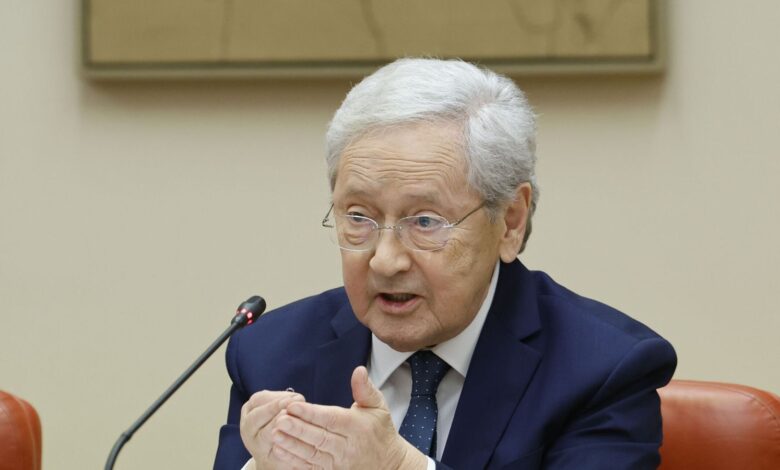
The departure of Fernando Ónega has become a significant event for Spanish society, as his name is inseparably linked to key moments in the country’s recent history. Ónega was one of those who helped shape public opinion during the challenging years of transition, when Spain was searching for its path after dictatorship. His articles and appearances often sparked discussions, and his reporting style stood out for its accuracy and respect for facts. According to El Confidencial, it was thanks to journalists like Ónega that Spaniards learned to trust independent media and value objectivity.
Many recall that Ónega began his journalistic career as a teenager, when after leaving the seminary he started collaborating with the regional press. His first articles appeared in El Progreso de Lugo, where he quickly earned the respect of both colleagues and readers. Even then, he showed an interest in cultural life, often interviewing visiting artists. This experience helped him develop his own style, which later became recognizable nationwide.
Contribution to public life
During the Spanish Transition (Transición Española), Ónega became one of the most renowned chroniclers, with millions reading and listening to his work. His analysis was characterized by balance, while his commentary on major events was always free from unnecessary emotion. As El Confidencial notes, colleagues highlighted his ability to remain neutral even in heated political debates. This earned Ónega the trust of people with diverse views and from different generations.
Among journalists and experts, there is frequent discussion about how such figures influence the development of civil society. Reflecting on Onega’s contribution, many highlight that his approach to journalism set an example for young professionals. He not only reported events but also helped the public understand their significance for the country’s future. In this context, it is interesting to compare his impact with how cultural initiatives can transform entire neighborhoods—much like a hair salon in Madrid became a gathering place for musicians and residents, as mentioned in the article about an unusual flamenco center in the capital.
Memory and recognition
Onega’s death sparked a wave of memories among his colleagues and readers. Many note that his voice was a symbol of trust and professionalism in Spanish journalism. In recent years, he served as the president of 65YMÁS, where he continued to share his experience and support young writers. His passing has prompted reflection on the role of the media in modern Spain and how society’s relationship with information is changing.
Recalling similar events, it is worth noting that in recent years Spanish journalism has already faced the loss of prominent figures. Each such case becomes a reason to rethink professional values and discuss the new challenges the media are facing. There is a growing public debate about the future of independent press and how to maintain public trust in an era of rapid change.
In recent years, Spain has witnessed growing interest in the history and personalities that have shaped the modern nation. Events related to the departure of prominent journalists always spark significant public reaction. Such news prompts discussions not only about professional standards but also about how society’s perception of information is changing. Reflecting on the contributions of those who have passed, Spaniards are increasingly contemplating the future of their press and the core values that must remain unchanged.