Disturbing news continues to come out of Andalusia, where the number of casualties is still rising after a collision between two high-speed trains near Adamuz, just outside Córdoba. So far, 42 deaths have been confirmed. Another 39 people are still hospitalized, including 13 in critical condition in intensive care units. The search and recovery operation is ongoing, and officials caution that the tragic toll may yet increase.
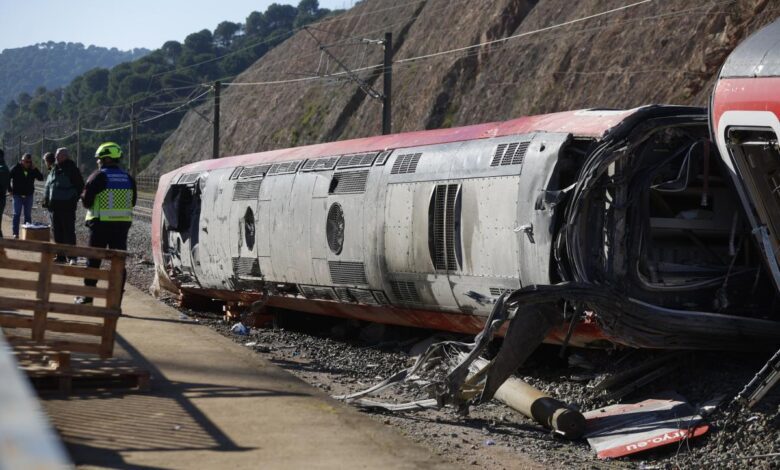
The situation at the scene remains extremely tense. Rescue teams, equipped with heavy machinery, are dismantling the mangled carriages in search of potential survivors. Some cars were literally crushed, while the front sections of one train fell off a four-meter embankment, making the rescue operation even more challenging. A sense of desperation hangs in the air, but no one is giving up—every minute could make the difference between life and death.
Chronicle of the disaster
The tragedy unfolded when an Iryo train suddenly derailed and collided with an Alvia service. The powerful impact tossed several carriages aside, with some tumbling down the embankment. The scene is chaotic: scattered debris, twisted metal, cries and screams. Forensic teams have already conducted 38 autopsies, yet dozens of families remain without answers—43 people have been officially reported missing.
Authorities are not ruling out any theories. Interior Minister Fernando Grande-Marlaska stated that sabotage is unlikely, but investigators are considering all possible causes. Special attention is being given to the condition of the rails and the technical examination of the sixth car of the Iryo train, which experts believe may shed light on the circumstances of the accident.
Official response
Prime Minister Pedro Sánchez declared three days of national mourning. He promised the investigation would be as open and thorough as possible. King Felipe VI and Queen Letizia arrived in Córdoba to offer their condolences to the victims and support the families of those who died. Their visit became a symbol of national unity in the face of tragedy.
Rail company Renfe quickly organized alternative routes between Madrid and Andalucía. Passengers are being offered bus transfers to bypass the affected area. However, the company strongly urges people to use this route only when absolutely necessary, to avoid additional strain on emergency services.
Rescue efforts
More than 220 emergency personnel, including firefighters, military units from UME, and members of the Guardia Civil, are deployed at the crash site. Their job is not only to clear the wreckage but also to assist in identifying the victims. In some cases, identification is possible only through DNA analysis due to the condition of the bodies.
Hotlines have been set up for victims and their families, with psychologists and volunteers on hand to assist. Authorities emphasize that coordination between various agencies and regions is more crucial than ever. Spain has come together in the face of tragedy, and messages of support are arriving from around the world.
The investigation is ongoing
The investigation is only just beginning, and a long road lies ahead to uncover the truth. The Commission for the Investigation of Railway Accidents (CIAF) has already started gathering evidence and analyzing technical documentation. Experts call this case one of the most complex in recent years: the combination of a derailment and the subsequent collision has created a uniquely challenging situation.
As the country holds its breath awaiting further updates, rescue workers are continuing around-the-clock operations. Every person found is a small victory amid the overall tragedy. Spain is enduring difficult days, and only time will tell whether more losses can be prevented.