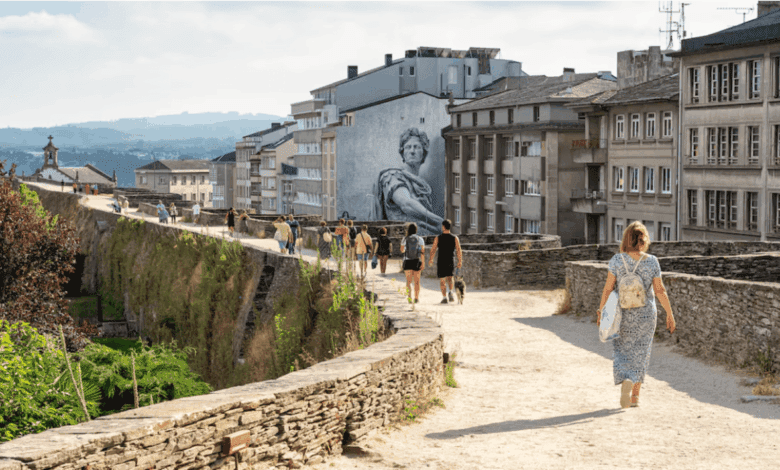
In Galicia, amid prolonged rains and storms, the Roman wall of Lugo has drawn the attention of experts and authorities. This monument, considered one of the best-preserved in the world, has unexpectedly faced serious consequences from extreme weather. Damage discovered after a series of storms revealed that even ancient structures are not protected from today’s climate challenges.
At the start of the year, heavy rains hit Lugo, turning the inside of the wall into a massive puddle. According to El Pais, experts noticed that the earth between the stone layers had become saturated with water, and part of a recently restored section couldn’t withstand the strain. On the night of February 7, stones slid down as if along a slope, alarming everyone involved in the monument’s preservation.
Causes and consequences
Experts quickly determined that the collapsed section was not part of the original Roman masonry but had been rebuilt in the early 20th century. Back then, to widen the street, builders used slate without the traditional mortar, making the structure vulnerable to moisture. Under normal conditions, this masonry could have lasted several more decades, but today’s extreme weather has changed the situation.
The architect responsible for preserving the wall noted that in the past, there were breaks between storms, giving the water time to evaporate. Now, however, the rain falls almost continuously, and the wall cannot cope with the load. As a result, according to specialists, water first pushed out the lower stones, and then the entire structure subsided evenly. Thanks to modern technology, restoration is possible—a detailed 3D model of the entire wall has been created over the past two years, allowing each element to be accurately reconstructed.
New approaches to protection
After the incident, the team of restorers and archaeologists reassessed how they monitor the monument’s condition. In the near future, monitoring will be strengthened and the number of observation points for cracks, vegetation, and humidity will be increased. The Galician authorities have promised that any necessary work will be carried out to prevent further damage.
Special attention is also given to controlling vegetation. Previously, chemicals were used to remove plants, but now experts are switching to gentler methods to avoid damaging the stone. This year, for the first time, a special solution based on natural acids will be used, allowing the growth of plants to be controlled without completely killing them.
Monument under observation
The Roman Wall of Lugo is under constant supervision by specialists, who regularly conduct inspections and develop preservation plans. According to El Pais, a new phase of work will be carried out over the next two years, including a detailed assessment of more than 500 segments of the wall. The team includes architects, restorers, historians, and archaeologists, ensuring every aspect of preserving this unique site is considered.
Authorities emphasize that the Wall of Lugo is not only the heritage of the city or the region but also of global value. UNESCO requires regular reports on the monument’s condition as well as plans for its protection. In 2027, Lugo will celebrate 20 years of partnership with the Great Wall of China, once again underlining the international significance of this site.
In recent years, Spain has seen an increase in damage to historical monuments caused by extreme weather events. For example, in 2024, heavy rains damaged ancient bridges in Aragón, and in 2025, urgent measures were needed to reinforce the walls of old castles in Andalusia following floods. These incidents demonstrate that climate change is becoming a serious challenge for the preservation of the country’s cultural heritage. Experts are continuing to seek new solutions to protect these unique sites from destruction.